Beans use an immune receptor to call in airstrikes on caterpillars
When they're being eaten, bean plants release chemicals that draw in parasitic wasps.
Signal weather
Rising
Momentum is building quickly, so this card is a good early entry point into the topic.
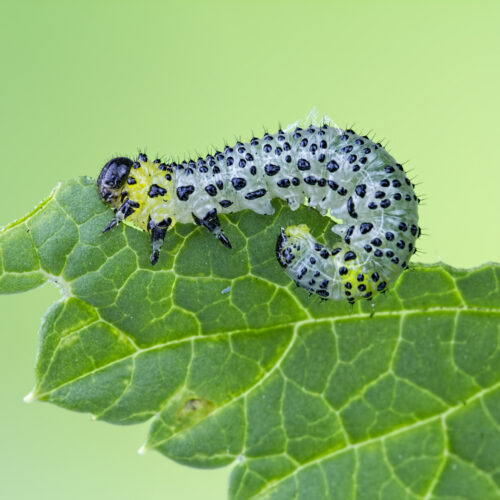
For decades, scientists have understood that plants can release volatile organic compounds—essentially airborne chemical signals—to attract the natural enemies of the things that eat them, like caterpillars. What we didn’t know was exactly how a plant translates the physical act of being eaten into a specific, predator-summoning distress signal. “[One] thing we didn’t know is how the plant detects the caterpillar in the first place,” says Adam Steinbrenner, a biologist at the University of Washington. Now, after years of experimenting with common bean plants in the lab and in the agricultural fields of Oaxaca, Mexico, Steinbrenner’s team pinpointed a single immune receptor that orchestrates its anti-caterpillar defense system. Drooling caterpillars When an herbivorous insect like a caterpillar feeds on a plant, it introduces its saliva straight into the plant's damaged tissues. This saliva contains biological clues called HAMPs: herbivore-associated molecular patterns. One of the HAMPs molecules is a peptide called inceptin, and there’s an 11-amino acid fragment of inceptin named In11, as well. Both of them turn out to be a fragment of the ATP synthase found in chloroplasts—basically a piece of one of the plant’s own proteins. As the caterpillar ingests the leaf, its gut enzymes chop up the plant's cellular engines and their pieces, including In11, are regurgitated back onto the leaf’s surface, albeit at extremely small concentrations. Read full article Comments
Stay on the signal
Follow Beans use an immune receptor to call in airstrikes on caterpillars
Follow this story beyond a single article: new follow-ups, adjacent sources, and the evolving storyline.
Story map
Understand this topic fast
A quick entry into the story: why it matters now, who is involved, and where to go next for context.
Why it matters now
Topic constellation
Open the live map for this story
See which entities, story threads, sources, and follow-up articles shape this story right now.
Click nodes to continue
Story timeline
Continue with this story
A short sequence of events and follow-up stories to understand the arc quickly.
How reliable this looks
Signal and trust for Ars Technica
This source works at a rapid pace: 100% of recent stories land in the hot window, and 0% carry visible search signal.
Reliability
92
Freshness
100
Sources in storyline
1
Related articles
More stories that share tags, source, or category context.

macOS 27 requires Apple Silicon, as Apple draws down the Intel Mac era
You'll need an M1 or better to run the next release of macOS.
Signal weather
Momentum is building quickly, so this card is a good early entry point into the topic.
Why now
Fresh coverage with immediate momentum.

iOS 27 and iPadOS 27 don't drop support for any iPhones—and just a few iPads
This promises to be a solid release for aging iPhones.
Signal weather
Momentum is building quickly, so this card is a good early entry point into the topic.
Why now
Fresh coverage with immediate momentum.

Meta alleges NSO violated spyware injunction with new WhatsApp attacks
WhatsApp disrupted spear phishing attempts, asks court to hold NSO in contempt.
Signal weather
Momentum is building quickly, so this card is a good early entry point into the topic.
Why now
Fresh coverage with immediate momentum.
The fastest humans in the galaxy just got a spiffy patch to prove it
"It is actually challenging how you measure [Mach] from space."
Signal weather
Momentum is building quickly, so this card is a good early entry point into the topic.
Why now
Fresh coverage with immediate momentum.
More from Ars Technica
Fresh reporting and follow-up coverage from the same newsroom.
macOS 27 requires Apple Silicon, as Apple draws down the Intel Mac era
You'll need an M1 or better to run the next release of macOS.
Signal weather
Momentum is building quickly, so this card is a good early entry point into the topic.
Why now
Fresh coverage with immediate momentum.
iOS 27 and iPadOS 27 don't drop support for any iPhones—and just a few iPads
This promises to be a solid release for aging iPhones.
Signal weather
Momentum is building quickly, so this card is a good early entry point into the topic.
Why now
Fresh coverage with immediate momentum.
Meta alleges NSO violated spyware injunction with new WhatsApp attacks
WhatsApp disrupted spear phishing attempts, asks court to hold NSO in contempt.
Signal weather
Momentum is building quickly, so this card is a good early entry point into the topic.
Why now
Fresh coverage with immediate momentum.
The fastest humans in the galaxy just got a spiffy patch to prove it
"It is actually challenging how you measure [Mach] from space."
Signal weather
Momentum is building quickly, so this card is a good early entry point into the topic.
Why now
Fresh coverage with immediate momentum.