Did a medieval flying monk spot Halley's comet, twice? It's complicated
University of Leicester historian thinks Eilmer of Malmesbury saw two different comets: in 1018 and 1066
Signal weather
Rising
Momentum is building quickly, so this card is a good early entry point into the topic.
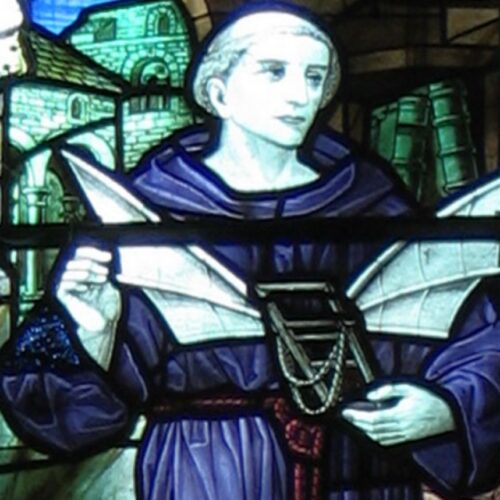
Early in the 11th century, a young Benedictine monk named Eilmer jumped from the 150-foot tower of his abbey in the small English town of Malmesbury, wearing a pair of crude wings he’d fashioned from willow wood and cloth. Eilmer managed to glide a good 600 feet, passing over the city wall before crash-landing in a small valley near the river Avon. The fall broke both his legs, crippling him. Malmesbury Abbey still boasts a stained-glass window in honor of Brother Eilmer. This legendary experiment in medieval aviation comes to us via 12th-century historian William of Malmesbury in an account written circa 1125, although William neglected to provide future historians with an exact date for the feat. But William does mention another key episode in Eilmer's life when the monk was "advanced in years": Eilmer witnessed Halley's comet in 1066, commenting, "It is long since I saw you." Some historians have interpreted this to mean that Eilmer saw Halley's comet on an earlier fly-by in 989, when he would have been a young boy. Assuming Eilmer was at least five years would in 989, he would have been born no later than 984. This would make Eilmer in his 80s in 1066, with his attempt at flight—which occurred when he was "in his first youth"—likely falling between 1000 and 1010. However, it's an estimate that is based on a lot of assumption, according to James Aitcheson of the University of Leicester, who argues in a paper published in the journal Notes and Queries that Eilmer may have seen a different comet altogether in his youth—the comet of 1018. If so, he would have been born much later and the date of his flight would have occurred between the 1020s and 1040s. Read full article Comments
Stay on the signal
Follow Did a medieval flying monk spot Halley's comet, twice? It's complicated
Follow this story beyond a single article: new follow-ups, adjacent sources, and the evolving storyline.
Story map
Understand this topic fast
A quick entry into the story: why it matters now, who is involved, and where to go next for context.
Why it matters now
Topic constellation
Open the live map for this story
See which entities, story threads, sources, and follow-up articles shape this story right now.
Click nodes to continue
Entity pages
Story timeline
Continue with this story
A short sequence of events and follow-up stories to understand the arc quickly.
How reliable this looks
Signal and trust for Ars Technica
This source works at a rapid pace: 100% of recent stories land in the hot window, and 0% carry visible search signal.
Reliability
92
Freshness
100
Sources in storyline
1
Related articles
More stories that share tags, source, or category context.

Review: Disclosure Day is big on action, light on ideas
There's nothing new or surprising, but it's still an entertaining film from one of our greatest directors.
Signal weather
Momentum is building quickly, so this card is a good early entry point into the topic.
Why now
Fresh coverage with immediate momentum.
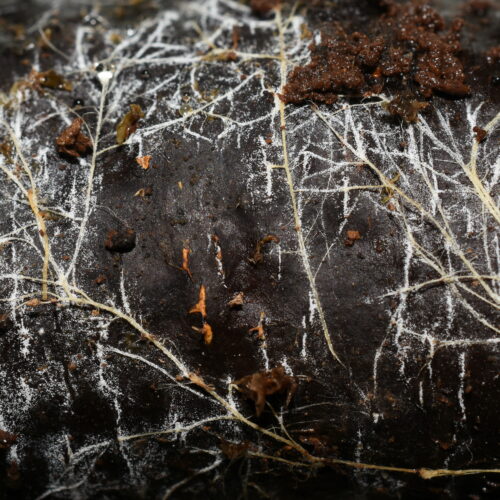
Threads of underground fungal networks are long enough to reach beyond the Solar System
Researchers have quantified the length and mass of arbuscular mycorrhizal fungal networks globally.
Signal weather
Momentum is building quickly, so this card is a good early entry point into the topic.
Why now
Fresh coverage with immediate momentum.

Anthropic shuts down Fable, Mythos models following Trump admin directive
Commerce dept. worries that a Fable 5 "jailbreak" could be a national security threat.
Signal weather
Momentum is building quickly, so this card is a good early entry point into the topic.
Why now
Fresh coverage with immediate momentum.

SpaceX is now a public company valued for its AI potential, so what comes next?
As of today, SpaceX is owned by investors who will want to see it make money.
Signal weather
Momentum is building quickly, so this card is a good early entry point into the topic.
Why now
Fresh coverage with immediate momentum.
More from Ars Technica
Fresh reporting and follow-up coverage from the same newsroom.
Review: Disclosure Day is big on action, light on ideas
There's nothing new or surprising, but it's still an entertaining film from one of our greatest directors.
Signal weather
Momentum is building quickly, so this card is a good early entry point into the topic.
Why now
Fresh coverage with immediate momentum.
Threads of underground fungal networks are long enough to reach beyond the Solar System
Researchers have quantified the length and mass of arbuscular mycorrhizal fungal networks globally.
Signal weather
Momentum is building quickly, so this card is a good early entry point into the topic.
Why now
Fresh coverage with immediate momentum.
Anthropic shuts down Fable, Mythos models following Trump admin directive
Commerce dept. worries that a Fable 5 "jailbreak" could be a national security threat.
Signal weather
Momentum is building quickly, so this card is a good early entry point into the topic.
Why now
Fresh coverage with immediate momentum.
SpaceX is now a public company valued for its AI potential, so what comes next?
As of today, SpaceX is owned by investors who will want to see it make money.
Signal weather
Momentum is building quickly, so this card is a good early entry point into the topic.
Why now
Fresh coverage with immediate momentum.