Eight months early and under budget, the Roman Telescope is ready to launch
Spy satellite hardware has been repurposed to scan the Universe in the infrared.
Signal weather
Stable
The story has moved beyond the first headline and now acts as a reliable context anchor.
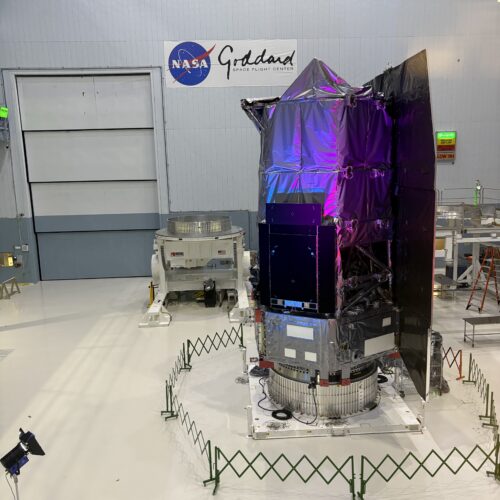
GREENBELT, Md.—On Tuesday, NASA invited the press to look at the fully assembled Nancy Grace Roman Space Telescope, which is now ready to join the ranks of the great observatories in orbit, ahead of its September launch. The Roman Space Telescope (NGRST), named after a key figure in the planning of the Hubble Space Telescope, is notably distinct from hardware like the Hubble and Webb, as it's designed around a wide-field view and massive imaging system that will allow it to send back 1.4 terabytes of data to Earth every day. It also has an unusual history that began when NASA's planning intersected with surplus spy hardware. In from the cold Many of the gases in our atmosphere absorb infrared wavelengths, contributing to the greenhouse effect that has helped keep the planet habitable for us. But that effect also makes infrared astronomy from Earth extremely difficult. That's unfortunate, as a number of important phenomena, from the earliest galaxies to the features of exoplanet atmospheres, are only detectable at infrared wavelengths. There have been a number of infrared-specific telescopes put into space, notably the Spitzer, one of the original suite of Great Observatories. Read full article Comments
Stay on the signal
Follow Eight months early and under budget, the Roman Telescope is ready to launch
Follow this story beyond a single article: new follow-ups, adjacent sources, and the evolving storyline.
Story map
Understand this topic fast
A quick entry into the story: why it matters now, who is involved, and where to go next for context.
Why it matters now
Topic constellation
Open the live map for this story
See which entities, story threads, sources, and follow-up articles shape this story right now.
Click nodes to continue
Entity pages
Story timeline
Continue with this story
A short sequence of events and follow-up stories to understand the arc quickly.
How reliable this looks
Signal and trust for Ars Technica
This source works at a rapid pace: 100% of recent stories land in the hot window, and 0% carry visible search signal.
Reliability
92
Freshness
100
Sources in storyline
1
Related articles
More stories that share tags, source, or category context.
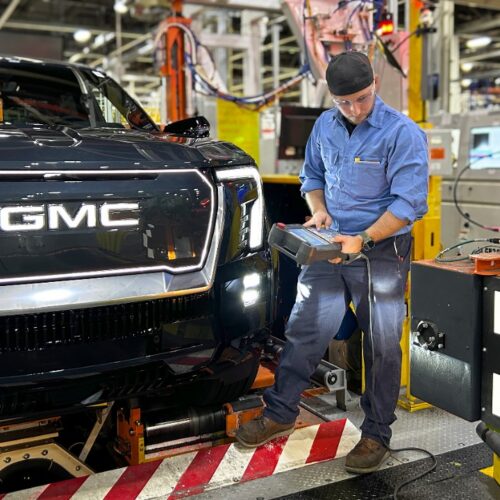
GM installs robots at flagship EV factory after laying off 1,300 workers
US autoworkers union warns of robot automation as dark factory future looms.
Signal weather
Momentum is building quickly, so this card is a good early entry point into the topic.
Why now
Fresh coverage with immediate momentum.
Man used massage gun on his tired eyeballs. It went as well as you'd expect.
He had retinal tears and bruises from squishing his eyeballs with the gun.
Signal weather
Momentum is building quickly, so this card is a good early entry point into the topic.
Why now
Fresh coverage with immediate momentum.

Polymarket's viral videos showed people winning big, but the bets were fake
"Winning" bets were made on cloned website and would have lost money, WSJ finds.
Signal weather
Momentum is building quickly, so this card is a good early entry point into the topic.
Why now
Fresh coverage with immediate momentum.

Following user outcry, AMD reinstates memory encryption in consumer CPUs
Critics saw the move as an underhanded way to steer them toward more costly chips.
Signal weather
Momentum is building quickly, so this card is a good early entry point into the topic.
Why now
Fresh coverage with immediate momentum.
More from Ars Technica
Fresh reporting and follow-up coverage from the same newsroom.
GM installs robots at flagship EV factory after laying off 1,300 workers
US autoworkers union warns of robot automation as dark factory future looms.
Signal weather
Momentum is building quickly, so this card is a good early entry point into the topic.
Why now
Fresh coverage with immediate momentum.
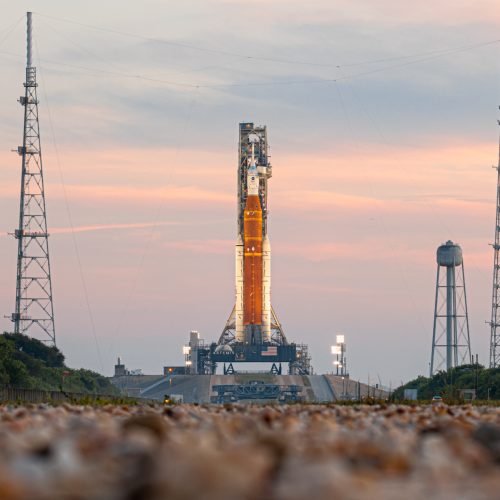
Report: Kennedy Space Center not ready for era of super heavy rockets
SpaceX has told NASA it plans to launch Starship every eight days from Kennedy.
Signal weather
Momentum is building quickly, so this card is a good early entry point into the topic.
Why now
Fresh coverage with immediate momentum.
Man used massage gun on his tired eyeballs. It went as well as you'd expect.
He had retinal tears and bruises from squishing his eyeballs with the gun.
Signal weather
Momentum is building quickly, so this card is a good early entry point into the topic.
Why now
Fresh coverage with immediate momentum.
Polymarket's viral videos showed people winning big, but the bets were fake
"Winning" bets were made on cloned website and would have lost money, WSJ finds.
Signal weather
Momentum is building quickly, so this card is a good early entry point into the topic.
Why now
Fresh coverage with immediate momentum.