Everyone’s a loser in Strait of Hormuz game that simulates global crisis
The game asks players to find the least worst options for a shipping chokepoint.
Signal weather
Stable
The story has moved beyond the first headline and now acts as a reliable context anchor.

It’s no fun living through the global energy shock and growing economic crisis that has ensued since the conflict choked off shipping through the Strait of Hormuz. But it can be enlightening to play through the new game Bottleneck that forces players to choose among the 2,000 ships still stuck in and around the strait—all while actual news reports and real maritime transit data help tell the story of the unfolding events. The free browser-based game challenges players to act as a fictional maritime coordinator by selecting a handful of ships that get to pass through the strait each day. Most decisions come with serious costs or trade-offs, whether it’s paying the toll imposed by the Iranian government that has claimed authority over the strait or antagonizing Iran or the United States while pushing either side toward widening the war. Failure to push through enough specific shipments can spark individual crises involving the price of oil, food, and water security, and a countdown to famine in many countries. “The game does not ask whether you are smart enough to solve the crisis,” said Jakub Gornicki, the journalist and artist who developed the game, in a post. “It asks what kind of damage you choose when every option has a cost.”Read full article Comments
Stay on the signal
Follow Everyone’s a loser in Strait of Hormuz game that simulates global crisis
Follow this story beyond a single article: new follow-ups, adjacent sources, and the evolving storyline.
Story map
Understand this topic fast
A quick entry into the story: why it matters now, who is involved, and where to go next for context.
Why it matters now
Topic constellation
Open the live map for this story
See which entities, story threads, sources, and follow-up articles shape this story right now.
Click nodes to continue
Entity pages
Story timeline
Continue with this story
A short sequence of events and follow-up stories to understand the arc quickly.
How reliable this looks
Signal and trust for Ars Technica
This source works at a rapid pace: 100% of recent stories land in the hot window, and 0% carry visible search signal.
Reliability
92
Freshness
100
Sources in storyline
2
Related articles
More stories that share tags, source, or category context.
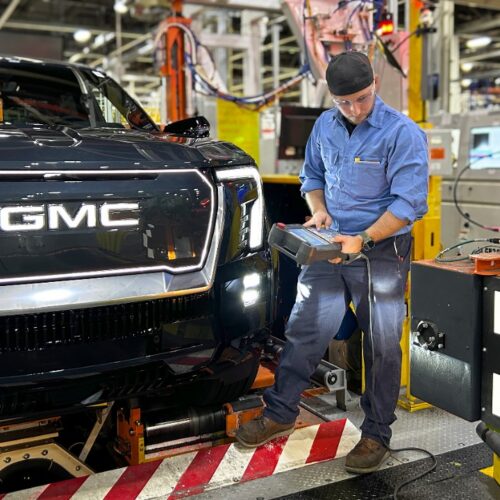
GM installs robots at flagship EV factory after laying off 1,300 workers
US autoworkers union warns of robot automation as dark factory future looms.
Signal weather
Momentum is building quickly, so this card is a good early entry point into the topic.
Why now
Fresh coverage with immediate momentum.
Man used massage gun on his tired eyeballs. It went as well as you'd expect.
He had retinal tears and bruises from squishing his eyeballs with the gun.
Signal weather
Momentum is building quickly, so this card is a good early entry point into the topic.
Why now
Fresh coverage with immediate momentum.

Polymarket's viral videos showed people winning big, but the bets were fake
"Winning" bets were made on cloned website and would have lost money, WSJ finds.
Signal weather
Momentum is building quickly, so this card is a good early entry point into the topic.
Why now
Fresh coverage with immediate momentum.

Following user outcry, AMD reinstates memory encryption in consumer CPUs
Critics saw the move as an underhanded way to steer them toward more costly chips.
Signal weather
Momentum is building quickly, so this card is a good early entry point into the topic.
Why now
Fresh coverage with immediate momentum.
More from Ars Technica
Fresh reporting and follow-up coverage from the same newsroom.
GM installs robots at flagship EV factory after laying off 1,300 workers
US autoworkers union warns of robot automation as dark factory future looms.
Signal weather
Momentum is building quickly, so this card is a good early entry point into the topic.
Why now
Fresh coverage with immediate momentum.
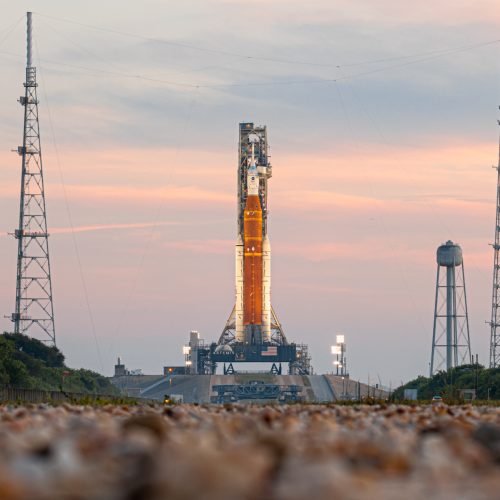
Report: Kennedy Space Center not ready for era of super heavy rockets
SpaceX has told NASA it plans to launch Starship every eight days from Kennedy.
Signal weather
Momentum is building quickly, so this card is a good early entry point into the topic.
Why now
Fresh coverage with immediate momentum.
Man used massage gun on his tired eyeballs. It went as well as you'd expect.
He had retinal tears and bruises from squishing his eyeballs with the gun.
Signal weather
Momentum is building quickly, so this card is a good early entry point into the topic.
Why now
Fresh coverage with immediate momentum.
Polymarket's viral videos showed people winning big, but the bets were fake
"Winning" bets were made on cloned website and would have lost money, WSJ finds.
Signal weather
Momentum is building quickly, so this card is a good early entry point into the topic.
Why now
Fresh coverage with immediate momentum.