Explanation for why we don't see two-foot-long dragonflies anymore fails
Breathing capacity could have compensated for lower atmospheric oxygen.
Signal weather
Stable
The story has moved beyond the first headline and now acts as a reliable context anchor.
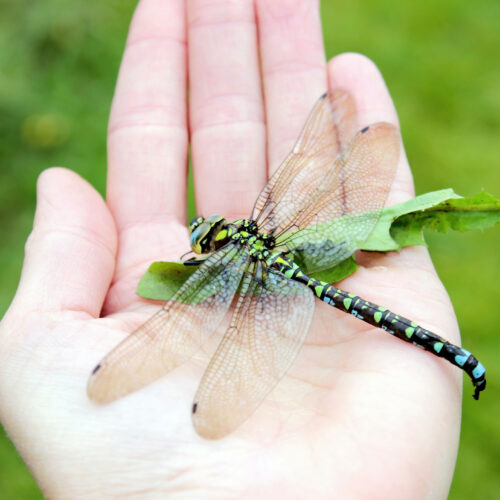
Three-hundred million years ago, the skies of the late Palaeozoic era were buzzing with giant insects. Meganeuropsis permiana, a predatory insect resembling a modern-day dragonfly, had a wingspan of over 70 centimeters and weighed 100 grams. Biologists looked at these ancient behemoths and asked why bugs aren’t this big anymore. Thirty years ago, they came up with an answer known as the "oxygen constraint hypothesis." For decades, we thought that any dragonflies the size of hawks needed highly oxygenated air to survive because insect breathing systems are less efficient than those of mammals, birds, or reptiles. As atmospheric oxygen levels dropped, there wasn’t enough to support giant bugs anymore. “It’s a simple, elegant explanation,” said Edward Snelling, a professor of veterinary science at the University of Pretoria. “But it’s wrong.” Insect breathing Unlike mammals, insects don't have a centralized pair of lungs and a closed circulatory system that delivers oxygen-rich blood to their tissues. “They breathe through internalized tubing called the tracheal system,” Snelling explained. Read full article Comments
Stay on the signal
Follow Explanation for why we don't see two-foot-long dragonflies anymore fails
Follow this story beyond a single article: new follow-ups, adjacent sources, and the evolving storyline.
Story map
Understand this topic fast
A quick entry into the story: why it matters now, who is involved, and where to go next for context.
Why it matters now
Topic constellation
Open the live map for this story
See which entities, story threads, sources, and follow-up articles shape this story right now.
Click nodes to continue
Entity pages
Story timeline
Continue with this story
A short sequence of events and follow-up stories to understand the arc quickly.
How reliable this looks
Signal and trust for Ars Technica
This source works at a rapid pace: 100% of recent stories land in the hot window, and 0% carry visible search signal.
Reliability
92
Freshness
100
Sources in storyline
1
Related articles
More stories that share tags, source, or category context.

SpaceX is now a public company valued for its AI potential, so what comes next?
As of today, SpaceX is owned by investors who will want to see it make money.
Signal weather
Momentum is building quickly, so this card is a good early entry point into the topic.
Why now
Fresh coverage with immediate momentum.

PeopleSoft 0-day affecting hundreds of organizations steals gigabytes of data
Vulnerability in the Oracle-owned PeopleSoft software is about as critical as they come.
Signal weather
Momentum is building quickly, so this card is a good early entry point into the topic.
Why now
Fresh coverage with immediate momentum.

Controversial FISA spying law expires tonight. The spying will continue.
Section 702 of FISA to expire tonight, but certification lasts until March 2027.
Signal weather
Momentum is building quickly, so this card is a good early entry point into the topic.
Why now
Fresh coverage with immediate momentum.

Here's what Jeff Bezos' new startup Prometheus will do
It isn't the only startup tackling physical AI, but it's one of the best-funded.
Signal weather
Momentum is building quickly, so this card is a good early entry point into the topic.
Why now
Fresh coverage with immediate momentum.
More from Ars Technica
Fresh reporting and follow-up coverage from the same newsroom.
SpaceX is now a public company valued for its AI potential, so what comes next?
As of today, SpaceX is owned by investors who will want to see it make money.
Signal weather
Momentum is building quickly, so this card is a good early entry point into the topic.
Why now
Fresh coverage with immediate momentum.
PeopleSoft 0-day affecting hundreds of organizations steals gigabytes of data
Vulnerability in the Oracle-owned PeopleSoft software is about as critical as they come.
Signal weather
Momentum is building quickly, so this card is a good early entry point into the topic.
Why now
Fresh coverage with immediate momentum.
Controversial FISA spying law expires tonight. The spying will continue.
Section 702 of FISA to expire tonight, but certification lasts until March 2027.
Signal weather
Momentum is building quickly, so this card is a good early entry point into the topic.
Why now
Fresh coverage with immediate momentum.
Here's what Jeff Bezos' new startup Prometheus will do
It isn't the only startup tackling physical AI, but it's one of the best-funded.
Signal weather
Momentum is building quickly, so this card is a good early entry point into the topic.
Why now
Fresh coverage with immediate momentum.