Gold isn’t inert, it just has bodyguards protecting it
Individual gold atoms move around to form oxidation-proof structures.
Signal weather
Rising
Momentum is building quickly, so this card is a good early entry point into the topic.

Gold is weird. It's one of the few metals that doesn’t really oxidize. Even silver and copper—from the same column of the periodic table—form weak oxides. Naively, you might expect that gold would tarnish just like silver. Gold also sits right next to platinum, but it has none of that metal’s catalytic properties. Then came gold nanoparticles that acted like catalysts, and we were confused by their apparent willingness to take part in chemical reactions. Now, a pair of scientists has explained that gold’s inertness isn’t inherent to the atom but rather to the surfaces that gold crystals form. Before we get to the results, let’s first take a look at the traditional explanation for gold’s inertness and why an inert material that has no catalytic activity suddenly acts as a catalyst when in its nanoparticle form. Read full article Comments
Stay on the signal
Follow Gold isn’t inert, it just has bodyguards protecting it
Follow this story beyond a single article: new follow-ups, adjacent sources, and the evolving storyline.
Story map
Understand this topic fast
A quick entry into the story: why it matters now, who is involved, and where to go next for context.
Why it matters now
Topic constellation
Open the live map for this story
See which entities, story threads, sources, and follow-up articles shape this story right now.
Click nodes to continue
Story timeline
Continue with this story
A short sequence of events and follow-up stories to understand the arc quickly.
How reliable this looks
Signal and trust for Ars Technica
This source works at a rapid pace: 100% of recent stories land in the hot window, and 0% carry visible search signal.
Reliability
92
Freshness
100
Sources in storyline
1
Related articles
More stories that share tags, source, or category context.
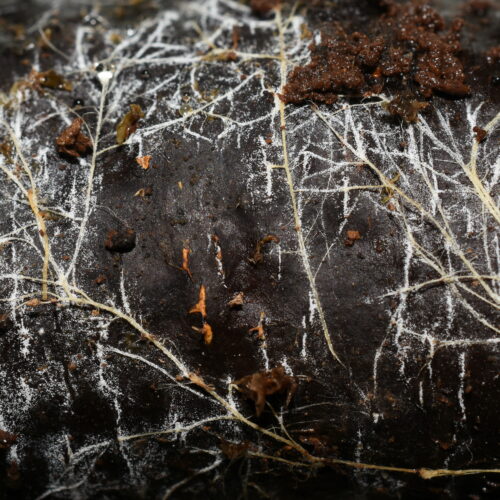
Threads of underground fungal networks are long enough to reach beyond the Solar System
Researchers have quantified the length and mass of arbuscular mycorrhizal fungal networks globally.
Signal weather
Momentum is building quickly, so this card is a good early entry point into the topic.
Why now
Fresh coverage with immediate momentum.
Anthropic shuts down Fable, Mythos models following Trump admin directive
Commerce dept. worries that a Fable 5 "jailbreak" could be a national security threat.
Signal weather
Momentum is building quickly, so this card is a good early entry point into the topic.
Why now
Fresh coverage with immediate momentum.

SpaceX is now a public company valued for its AI potential, so what comes next?
As of today, SpaceX is owned by investors who will want to see it make money.
Signal weather
Momentum is building quickly, so this card is a good early entry point into the topic.
Why now
Fresh coverage with immediate momentum.

PeopleSoft 0-day affecting hundreds of organizations steals gigabytes of data
Vulnerability in the Oracle-owned PeopleSoft software is about as critical as they come.
Signal weather
Momentum is building quickly, so this card is a good early entry point into the topic.
Why now
Fresh coverage with immediate momentum.
More from Ars Technica
Fresh reporting and follow-up coverage from the same newsroom.
Threads of underground fungal networks are long enough to reach beyond the Solar System
Researchers have quantified the length and mass of arbuscular mycorrhizal fungal networks globally.
Signal weather
Momentum is building quickly, so this card is a good early entry point into the topic.
Why now
Fresh coverage with immediate momentum.
Anthropic shuts down Fable, Mythos models following Trump admin directive
Commerce dept. worries that a Fable 5 "jailbreak" could be a national security threat.
Signal weather
Momentum is building quickly, so this card is a good early entry point into the topic.
Why now
Fresh coverage with immediate momentum.
SpaceX is now a public company valued for its AI potential, so what comes next?
As of today, SpaceX is owned by investors who will want to see it make money.
Signal weather
Momentum is building quickly, so this card is a good early entry point into the topic.
Why now
Fresh coverage with immediate momentum.
PeopleSoft 0-day affecting hundreds of organizations steals gigabytes of data
Vulnerability in the Oracle-owned PeopleSoft software is about as critical as they come.
Signal weather
Momentum is building quickly, so this card is a good early entry point into the topic.
Why now
Fresh coverage with immediate momentum.