Google bumps up Q Day deadline to 2029, far sooner than previously thought
Company warns entire industry to move off RSA and EC more quickly.
Signal weather
Stable
The story has moved beyond the first headline and now acts as a reliable context anchor.

Google is dramatically shortening its readiness deadline for the arrival of Q Day, the point at which existing quantum computers can break public-key cryptography algorithms that secure decades' worth of secrets belonging to militaries, banks, governments, and nearly every individual on earth. In a post published on Wednesday, Google said it is giving itself until 2029 to prepare for this event. The post went on to warn that the rest of the world needs to follow suit by adopting PQC—short for post-quantum cryptography—algorithms to augment or replace elliptic curves and RSA, both of which will be broken. The end is nigh “As a pioneer in both quantum and PQC, it’s our responsibility to lead by example and share an ambitious timeline,” wrote Heather Adkins, Google’s VP of security engineering, and Sophie Schmieg, a senior cryptography engineer. “By doing this, we hope to provide the clarity and urgency needed to accelerate digital transitions not only for Google, but also across the industry.”Read full article Comments
Stay on the signal
Follow Google bumps up Q Day deadline to 2029, far sooner than previously thought
Follow this story beyond a single article: new follow-ups, adjacent sources, and the evolving storyline.
Story map
Understand this topic fast
A quick entry into the story: why it matters now, who is involved, and where to go next for context.
Why it matters now
Topic constellation
Open the live map for this story
See which entities, story threads, sources, and follow-up articles shape this story right now.
Click nodes to continue
Entity pages
Story timeline
Continue with this story
A short sequence of events and follow-up stories to understand the arc quickly.
How reliable this looks
Signal and trust for Ars Technica
This source works at a rapid pace: 100% of recent stories land in the hot window, and 0% carry visible search signal.
Reliability
92
Freshness
100
Sources in storyline
3
Related articles
More stories that share tags, source, or category context.
Notion killing Skiff-influenced email app since most users use AI agents instead
Notion is "going all in on using agents to run your inbox."
Signal weather
Momentum is building quickly, so this card is a good early entry point into the topic.
Why now
Fresh coverage with immediate momentum.

Google finally releases a Finance Android app, promises iOS version later in 2026
It took 20 years, but the Finance app arrives just in time to be packed full of AI.
Signal weather
Momentum is building quickly, so this card is a good early entry point into the topic.
Why now
Fresh coverage with immediate momentum.
Anthropic says Alibaba must be punished for largest Claude cloning attack
Alibaba allegedly used 25,000 accounts to mine Claude over 28.8 million exchanges.
Signal weather
Momentum is building quickly, so this card is a good early entry point into the topic.
Why now
Fresh coverage with immediate momentum.
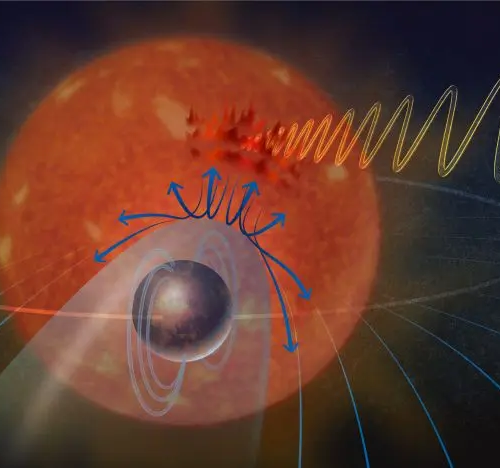
Planet orbits so close to its star that their magnetic fields connect
At the right point of the orbit and stellar cycle, the star's chromosphere brightens.
Signal weather
Momentum is building quickly, so this card is a good early entry point into the topic.
Why now
Fresh coverage with immediate momentum.
More from Ars Technica
Fresh reporting and follow-up coverage from the same newsroom.
Notion killing Skiff-influenced email app since most users use AI agents instead
Notion is "going all in on using agents to run your inbox."
Signal weather
Momentum is building quickly, so this card is a good early entry point into the topic.
Why now
Fresh coverage with immediate momentum.
Google finally releases a Finance Android app, promises iOS version later in 2026
It took 20 years, but the Finance app arrives just in time to be packed full of AI.
Signal weather
Momentum is building quickly, so this card is a good early entry point into the topic.
Why now
Fresh coverage with immediate momentum.
Anthropic says Alibaba must be punished for largest Claude cloning attack
Alibaba allegedly used 25,000 accounts to mine Claude over 28.8 million exchanges.
Signal weather
Momentum is building quickly, so this card is a good early entry point into the topic.
Why now
Fresh coverage with immediate momentum.
Planet orbits so close to its star that their magnetic fields connect
At the right point of the orbit and stellar cycle, the star's chromosphere brightens.
Signal weather
Momentum is building quickly, so this card is a good early entry point into the topic.
Why now
Fresh coverage with immediate momentum.