Google's SynthID AI watermarking tech is being adopted by OpenAI, Nvidia, and more
AI content is getting good, but SynthID might be able to help tell truth from fiction.
Signal weather
Rising
Momentum is building quickly, so this card is a good early entry point into the topic.
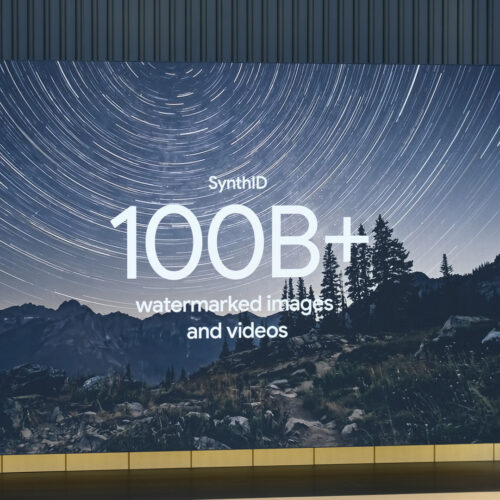
In a few short years, we've gone from easily identifying AI content that featured superfluous fingers to images and videos that look shockingly realistic. How can we know what's real in the age of AI? Google's answer is SynthID, which it first demonstrated three years ago. The company says SynthID has since been used to label 100 billion images and videos, plus 60,000 years' worth of audio. Those numbers are only going up now that SynthID is expanding beyond Google. SynthID is not Google's only AI labeling strategy. It's also committed to the C2PA standard, which tags content with metadata describing how it was created. Google began using C2PA more prominently with its Pixel 10 smartphones. Photos taken with the Pixel 10 include metadata describing how they were processed. If a highly zoomed image includes generative elements, it gets an AI tag, too. Google now says this same feature is coming to videos recorded on Pixel 8, 9, and 10 phones in an update in the coming weeks. It's also adding C2PA scanning to Gemini, allowing the chatbot to explain a file's providence based on the content labeling. This same capability will come to Chrome and Search in a few months. Read full article Comments
Stay on the signal
Follow Google's SynthID AI watermarking tech is being adopted by OpenAI, Nvidia, and more
Follow this story beyond a single article: new follow-ups, adjacent sources, and the evolving storyline.
Story map
Understand this topic fast
A quick entry into the story: why it matters now, who is involved, and where to go next for context.
Why it matters now
Topic constellation
Open the live map for this story
See which entities, story threads, sources, and follow-up articles shape this story right now.
Click nodes to continue
Story timeline
Continue with this story
A short sequence of events and follow-up stories to understand the arc quickly.
How reliable this looks
Signal and trust for Ars Technica
This source works at a rapid pace: 100% of recent stories land in the hot window, and 0% carry visible search signal.
Reliability
92
Freshness
100
Sources in storyline
3
Related articles
More stories that share tags, source, or category context.
OpenAI Adopts Google's SynthID Watermark for AI Images with Verification Tool
Comments
Signal weather
Momentum is building quickly, so this card is a good early entry point into the topic.
Why now
Fresh coverage with immediate momentum.
Google takes a page out of Meta’s book, announces new audio-powered smart glasses
Google is calling the new devices "audio glasses," in that users will be able to issue verbal commands to them and get things done via its ecosystem of apps and services, includ...
Signal weather
Momentum is building quickly, so this card is a good early entry point into the topic.
Why now
Fresh coverage with immediate momentum.
Mistral AI Acquires Emmi AI to Create the Leading AI Stack
Comments
Signal weather
Momentum is building quickly, so this card is a good early entry point into the topic.
Why now
Fresh coverage with immediate momentum.
Two AI-based science assistants succeed with drug-retargeting tasks
Both tools generate hypotheses; one goes on to analyze some of the data.
Signal weather
Momentum is building quickly, so this card is a good early entry point into the topic.
Why now
Fresh coverage with immediate momentum.
More from Ars Technica
Fresh reporting and follow-up coverage from the same newsroom.
Two AI-based science assistants succeed with drug-retargeting tasks
Both tools generate hypotheses; one goes on to analyze some of the data.
Signal weather
Momentum is building quickly, so this card is a good early entry point into the topic.
Why now
Fresh coverage with immediate momentum.
In stunning display of stupid, secret CISA credentials found in public GitHub repo
SSH keys, plaintext passwords, other sensitive data had been up since November 2025.
Signal weather
Momentum is building quickly, so this card is a good early entry point into the topic.
Why now
Fresh coverage with immediate momentum.
RFK Jr. forced to withdraw charter that opened CDC panel to anti-vaccine quacks
Charter would have expanded member eligibility and focused on alleged injuries.
Signal weather
Momentum is building quickly, so this card is a good early entry point into the topic.
Why now
Fresh coverage with immediate momentum.
Gemini 3.5 Flash might be fast enough for gen AI to make sense
Google says its more efficient Gemini 3.5 Flash is the key to your agentic AI future.
Signal weather
Momentum is building quickly, so this card is a good early entry point into the topic.
Why now
Fresh coverage with immediate momentum.