Gravitational lens shows a galaxy just 800 million years post-Big Bang
Early galaxy has elements produced by the Universe's first supernovae.
Signal weather
Stable
The story has moved beyond the first headline and now acts as a reliable context anchor.
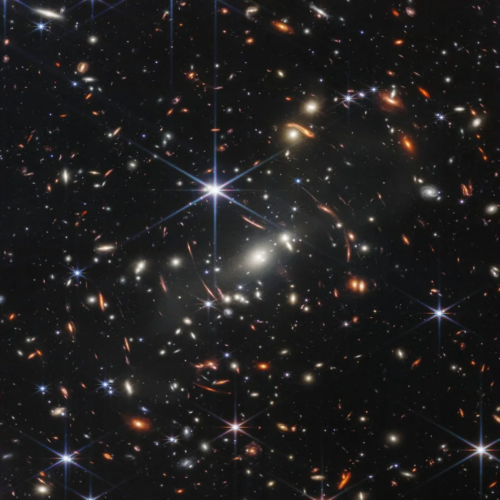
For decades, astronomers looking through telescopes like Hubble have been trying to catch a glimpse of the ancient epoch when the Universe's first generation of stars ignited. But the small galaxies that were the building blocks of the cosmos we know today were too faint to spot, even by the most powerful instruments. Now it seems astronomers finally have two things on their side: the Webb Space Telescope and a bit of luck. In a recent paper in Nature, a team of scientists led by Kimihiko Nakajima, an astronomer at the Kanazawa University, Japan, used the James Webb Space Telescope to observe an ultra-faint galaxy called LAP1-B as it existed roughly 800 million years after the Big Bang. It’s the most chemically primitive galaxy we’ve ever seen. The magnifying glass The LAP1-B is 13 billion light-years away from Earth. To observe an object that faint and distant, even the huge, gold-coated beryllium mirrors of JWST were not enough on their own. We spotted it due to a massive cluster of galaxies called the MACS J046, which warps the spacetime between us and the LAP1-B.Read full article Comments
Stay on the signal
Follow Gravitational lens shows a galaxy just 800 million years post-Big Bang
Follow this story beyond a single article: new follow-ups, adjacent sources, and the evolving storyline.
Story map
Understand this topic fast
A quick entry into the story: why it matters now, who is involved, and where to go next for context.
Why it matters now
Topic constellation
Open the live map for this story
See which entities, story threads, sources, and follow-up articles shape this story right now.
Click nodes to continue
Story timeline
Continue with this story
A short sequence of events and follow-up stories to understand the arc quickly.
How reliable this looks
Signal and trust for Ars Technica
This source works at a rapid pace: 100% of recent stories land in the hot window, and 0% carry visible search signal.
Reliability
92
Freshness
100
Sources in storyline
1
Related articles
More stories that share tags, source, or category context.
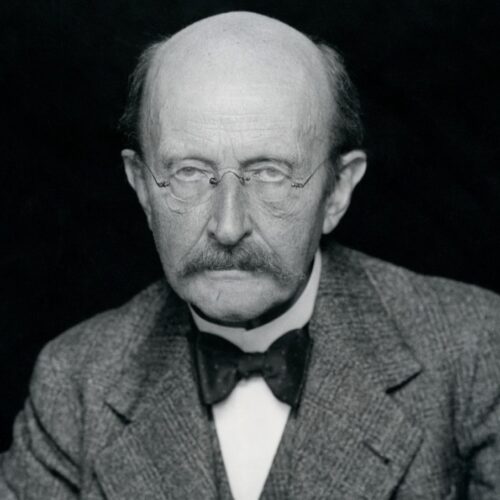
Why did this journal retract two 1940s papers by Max Planck?
Clicking on the links now reveals blank pages and empty PDFs. "Intellectually, it’s not acceptable.”
Signal weather
Momentum is building quickly, so this card is a good early entry point into the topic.
Why now
Fresh coverage with immediate momentum.

Apple and Audi alumni have made a luxe EV based on the moon buggy
The Amble One is a street-legal $25,000 electric buggy designed for luxury resorts.
Signal weather
Momentum is building quickly, so this card is a good early entry point into the topic.
Why now
Fresh coverage with immediate momentum.

South Korea plans to train entire military as "drone warriors"
Half-million strong military will train on drones as “universal combat tool.”
Signal weather
Momentum is building quickly, so this card is a good early entry point into the topic.
Why now
Fresh coverage with immediate momentum.
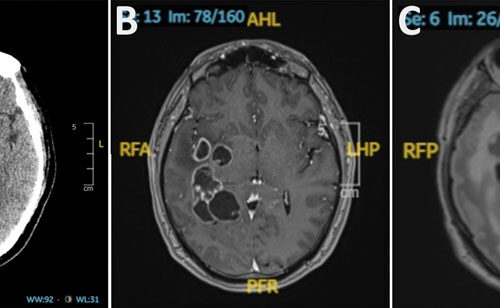
Doctors suspected man had brain cancer. He actually had worms.
His doctors went looking for cancer, then they saw the worms' heads.
Signal weather
Momentum is building quickly, so this card is a good early entry point into the topic.
Why now
Fresh coverage with immediate momentum.
More from Ars Technica
Fresh reporting and follow-up coverage from the same newsroom.
Why did this journal retract two 1940s papers by Max Planck?
Clicking on the links now reveals blank pages and empty PDFs. "Intellectually, it’s not acceptable.”
Signal weather
Momentum is building quickly, so this card is a good early entry point into the topic.
Why now
Fresh coverage with immediate momentum.
Apple and Audi alumni have made a luxe EV based on the moon buggy
The Amble One is a street-legal $25,000 electric buggy designed for luxury resorts.
Signal weather
Momentum is building quickly, so this card is a good early entry point into the topic.
Why now
Fresh coverage with immediate momentum.
South Korea plans to train entire military as "drone warriors"
Half-million strong military will train on drones as “universal combat tool.”
Signal weather
Momentum is building quickly, so this card is a good early entry point into the topic.
Why now
Fresh coverage with immediate momentum.
Doctors suspected man had brain cancer. He actually had worms.
His doctors went looking for cancer, then they saw the worms' heads.
Signal weather
Momentum is building quickly, so this card is a good early entry point into the topic.
Why now
Fresh coverage with immediate momentum.