Here's how F1 is tweaking its hybrid systems to try to save the show
Energy management and speed differentials are the problems of the day.
Signal weather
Stable
The story has moved beyond the first headline and now acts as a reliable context anchor.
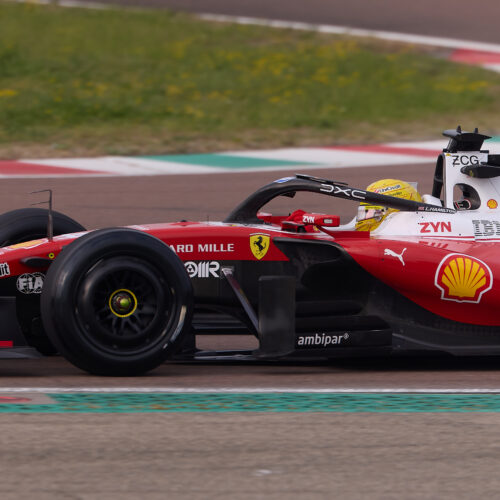
After spending the last couple of weeks discussing the problem, Formula 1's stakeholders have arrived at a number of solutions to the sport's hybrid energy problem. F1 started this year with all-new powertrains with much more powerful electric motors than ever before, but with batteries that can only send full power to those motors for a few seconds a lap. Once exhausted, the power halves until there's more charge in the battery. In qualifying this ruins the show, as the fastest lap is no longer a flat-out one; in the race it can create dangerous speed differentials with other cars that still have charge in their battery. The new rules, which go into effect from the Miami Grand Prix (May 1–3), reduce the maximum energy you can recharge per lap. The battery holds 4 MJ, and in the past few races, each driver has been allowed to recharge and then use up to 8 MJ per lap to power the electric motor that supplements the turbocharged V6 engine. Recharging is done through a mixture of regenerative braking and what the sport calls "super clipping," using the engine to power the electric motor as a generator to charge the battery. The problem is that every kW that gets super-clipped from the engine is a kW that isn't going to the rear wheels, creating speed differentials of up to 70 km/h (43 mph). And without an electric motor at the front axle, the cars can only harvest a few MJ via regenerative braking each lap. Read full article Comments
Stay on the signal
Follow Here's how F1 is tweaking its hybrid systems to try to save the show
Follow this story beyond a single article: new follow-ups, adjacent sources, and the evolving storyline.
Story map
Understand this topic fast
A quick entry into the story: why it matters now, who is involved, and where to go next for context.
Why it matters now
Topic constellation
Open the live map for this story
See which entities, story threads, sources, and follow-up articles shape this story right now.
Click nodes to continue
Entity pages
Story timeline
Continue with this story
A short sequence of events and follow-up stories to understand the arc quickly.
How reliable this looks
Signal and trust for Ars Technica
This source works at a rapid pace: 100% of recent stories land in the hot window, and 0% carry visible search signal.
Reliability
92
Freshness
100
Sources in storyline
1
Related articles
More stories that share tags, source, or category context.
macOS 27 requires Apple Silicon, as Apple draws down the Intel Mac era
You'll need an M1 or better to run the next release of macOS.
Signal weather
Momentum is building quickly, so this card is a good early entry point into the topic.
Why now
Fresh coverage with immediate momentum.

iOS 27 and iPadOS 27 don't drop support for any iPhones—and just a few iPads
This promises to be a solid release for aging iPhones.
Signal weather
Momentum is building quickly, so this card is a good early entry point into the topic.
Why now
Fresh coverage with immediate momentum.
Meta alleges NSO violated spyware injunction with new WhatsApp attacks
WhatsApp disrupted spear phishing attempts, asks court to hold NSO in contempt.
Signal weather
Momentum is building quickly, so this card is a good early entry point into the topic.
Why now
Fresh coverage with immediate momentum.
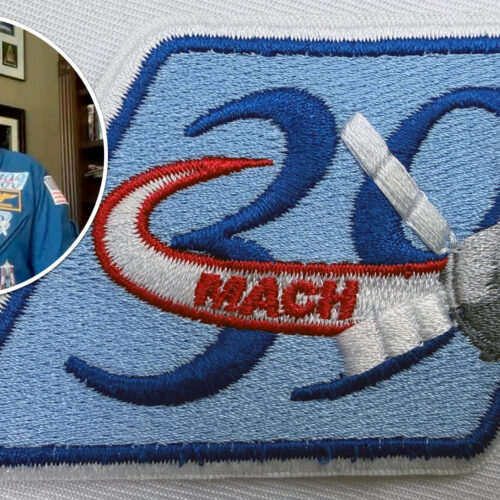
The fastest humans in the galaxy just got a spiffy patch to prove it
"It is actually challenging how you measure [Mach] from space."
Signal weather
Momentum is building quickly, so this card is a good early entry point into the topic.
Why now
Fresh coverage with immediate momentum.
More from Ars Technica
Fresh reporting and follow-up coverage from the same newsroom.
macOS 27 requires Apple Silicon, as Apple draws down the Intel Mac era
You'll need an M1 or better to run the next release of macOS.
Signal weather
Momentum is building quickly, so this card is a good early entry point into the topic.
Why now
Fresh coverage with immediate momentum.
iOS 27 and iPadOS 27 don't drop support for any iPhones—and just a few iPads
This promises to be a solid release for aging iPhones.
Signal weather
Momentum is building quickly, so this card is a good early entry point into the topic.
Why now
Fresh coverage with immediate momentum.
Meta alleges NSO violated spyware injunction with new WhatsApp attacks
WhatsApp disrupted spear phishing attempts, asks court to hold NSO in contempt.
Signal weather
Momentum is building quickly, so this card is a good early entry point into the topic.
Why now
Fresh coverage with immediate momentum.
The fastest humans in the galaxy just got a spiffy patch to prove it
"It is actually challenging how you measure [Mach] from space."
Signal weather
Momentum is building quickly, so this card is a good early entry point into the topic.
Why now
Fresh coverage with immediate momentum.