How pigeons exploit magnetic fields for navigation
Iron-rich immune cells in the liver may act as sensors for magnetic fields, serving as an internal compass.
Signal weather
Rising
Momentum is building quickly, so this card is a good early entry point into the topic.

Scientists have long known that migrating birds and homing pigeons navigate in part by sensing the Earth's magnetic fields, especially at night or in overcast conditions when visual landmarks or sunshine are in short supply. But exactly where this magneto-sensing occurs in the body—and the mechanism that enables it—remains a matter of intense debate. A new paper published in the journal Science suggests that homing pigeons have iron-rich immune cells in their livers that help them detect magnetic fields and transmit that information to the brain. There are three primary hypotheses for how birds might sense Earth's geomagnetic field. One is a compass-like mechanism, whereby the Earth exerts a pull on magnetic particles in a bird's upper beak that relays directional information via a large nerve in the cranium. A second is that it happens biologically via cellular ion channels sensitive to voltage, enabling birds to sense changes in the magnetic field. And a third suggests that physical effects on retinal pigments enable birds to detect photons and send signals to the brain, although this mechanism is really only viable in the light. None fully explain how animals can sense magnetic fields. However, “We had some clues that the liver and spleen have magnetic properties, because they break down red blood cells and so store much iron in the body,” said co-author Clivia Lisowski of the University of Bonn and the University Hospital Bonn. This refers to a 2015 paper suggesting that red pulp macrophages in the spleens of mice and humans are intrinsically superparamagnetic and hence more sensitive to magnetic fields. But it wasn't clear if those properties were involved in any kind of magnetoreception. Read full article Comments
Stay on the signal
Follow How pigeons exploit magnetic fields for navigation
Follow this story beyond a single article: new follow-ups, adjacent sources, and the evolving storyline.
Story map
Understand this topic fast
A quick entry into the story: why it matters now, who is involved, and where to go next for context.
Why it matters now
Topic constellation
Open the live map for this story
See which entities, story threads, sources, and follow-up articles shape this story right now.
Click nodes to continue
Story timeline
Continue with this story
A short sequence of events and follow-up stories to understand the arc quickly.
How reliable this looks
Signal and trust for Ars Technica
This source works at a rapid pace: 100% of recent stories land in the hot window, and 0% carry visible search signal.
Reliability
92
Freshness
100
Sources in storyline
1
Related articles
More stories that share tags, source, or category context.

US healthcare still stupidly expensive, with pathetic outcomes, study finds
There are strategies to improve healthcare, but US isn't trying them.
Signal weather
Momentum is building quickly, so this card is a good early entry point into the topic.
Why now
Fresh coverage with immediate momentum.
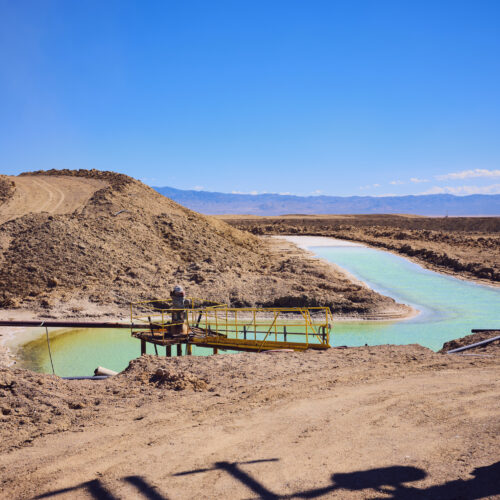
Researchers develop a new process to get lithium out of rocks
If it scales up, it can help us diversify our sources of a key element.
Signal weather
Momentum is building quickly, so this card is a good early entry point into the topic.
Why now
Fresh coverage with immediate momentum.

A respectable port of Age of Empires II: Definitive Edition invades macOS
The port seems solid, and all DLC is supported—but there's no crossplay, sadly.
Signal weather
Momentum is building quickly, so this card is a good early entry point into the topic.
Why now
Fresh coverage with immediate momentum.

Apple working to cram massive Gemini model into iPhone to power new Siri
As Apple tries to shrink Gemini for the iPhone, a cloud component is probably inevitable.
Signal weather
Momentum is building quickly, so this card is a good early entry point into the topic.
Why now
Fresh coverage with immediate momentum.
More from Ars Technica
Fresh reporting and follow-up coverage from the same newsroom.
US healthcare still stupidly expensive, with pathetic outcomes, study finds
There are strategies to improve healthcare, but US isn't trying them.
Signal weather
Momentum is building quickly, so this card is a good early entry point into the topic.
Why now
Fresh coverage with immediate momentum.
Researchers develop a new process to get lithium out of rocks
If it scales up, it can help us diversify our sources of a key element.
Signal weather
Momentum is building quickly, so this card is a good early entry point into the topic.
Why now
Fresh coverage with immediate momentum.

FBI says Google engineer used internal search data to win $1.2M on Polymarket
FBI: Googler who knew outcome of bets in advance made $1.2M profit on Polymarket.
Signal weather
Momentum is building quickly, so this card is a good early entry point into the topic.
Why now
Fresh coverage with immediate momentum.
A respectable port of Age of Empires II: Definitive Edition invades macOS
The port seems solid, and all DLC is supported—but there's no crossplay, sadly.
Signal weather
Momentum is building quickly, so this card is a good early entry point into the topic.
Why now
Fresh coverage with immediate momentum.