I’ve fired one of America’s most powerful lasers—here’s what a shot day looks like
The laser was used to study the physics of stellar interiors and fusion energy, among other things.
Signal weather
Stable
The story has moved beyond the first headline and now acts as a reliable context anchor.
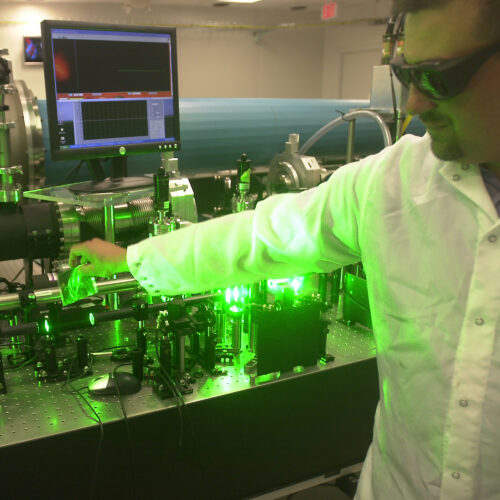
If you walk across the open yard in front of the Physics, Math, and Astronomy building at the University of Texas at Austin, you’ll see a 17-story tower and a huge L-shaped building. What you won’t see is what’s underneath you. Two floors below ground, behind heavy double doors stamped with a logo that most students have never noticed, sits one of the most powerful lasers in the United States. I was the lead laser scientist on the Texas Petawatt, or TPW as we called it, from 2020 to 2024. Texas Petawatt, which is currently closed due to funding cuts, was a government-funded research center where scientists from across the country applied for time to use specialized equipment. It was part of LaserNetUS, a Department of Energy network of high-power laser labs. This type of laser takes a tiny pulse of light, stretches it out so it doesn’t blast optics to pieces, and amplifies it until, for a brief instant, it carries more power than the entire US electrical grid. Then it compresses the pulse back to a trillionth of a second to create a star in a vacuum chamber. Read full article Comments
Stay on the signal
Follow I’ve fired one of America’s most powerful lasers—here’s what a shot day looks like
Follow this story beyond a single article: new follow-ups, adjacent sources, and the evolving storyline.
Story map
Understand this topic fast
A quick entry into the story: why it matters now, who is involved, and where to go next for context.
Why it matters now
Topic constellation
Open the live map for this story
See which entities, story threads, sources, and follow-up articles shape this story right now.
Click nodes to continue
Entity pages
Story timeline
Continue with this story
A short sequence of events and follow-up stories to understand the arc quickly.
How reliable this looks
Signal and trust for Ars Technica
This source works at a rapid pace: 100% of recent stories land in the hot window, and 0% carry visible search signal.
Reliability
92
Freshness
100
Sources in storyline
1
Related articles
More stories that share tags, source, or category context.
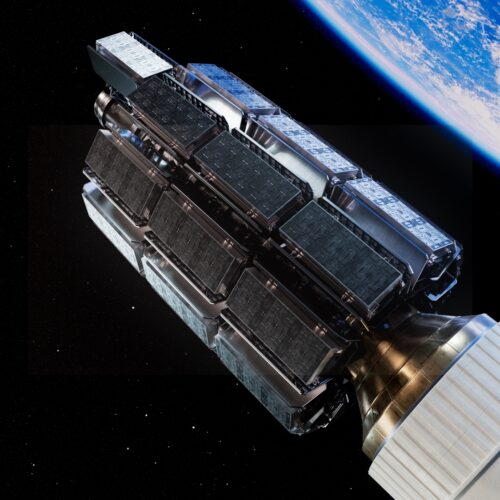
FCC lifts looming deadline for Amazon Leo satellite broadband constellation
The waiver "serves the public interest by promoting a second large satellite broadband constellation."
Signal weather
Momentum is building quickly, so this card is a good early entry point into the topic.
Why now
Fresh coverage with immediate momentum.
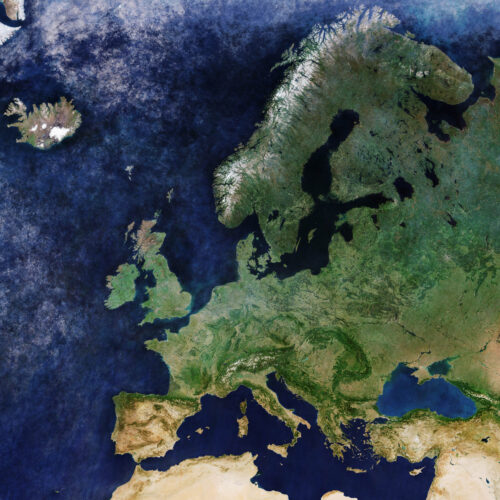
Tests suggest Russian satellites can jam GPS on a continental scale
Mystery of GPS interference across Europe raises questions about Russian motives.
Signal weather
Momentum is building quickly, so this card is a good early entry point into the topic.
Why now
Fresh coverage with immediate momentum.
macOS 27 requires Apple Silicon, as Apple draws down the Intel Mac era
You'll need an M1 or better to run the next release of macOS.
Signal weather
Momentum is building quickly, so this card is a good early entry point into the topic.
Why now
Fresh coverage with immediate momentum.

iOS 27 and iPadOS 27 don't drop support for any iPhones—and just a few iPads
This promises to be a solid release for aging iPhones.
Signal weather
Momentum is building quickly, so this card is a good early entry point into the topic.
Why now
Fresh coverage with immediate momentum.
More from Ars Technica
Fresh reporting and follow-up coverage from the same newsroom.
FCC lifts looming deadline for Amazon Leo satellite broadband constellation
The waiver "serves the public interest by promoting a second large satellite broadband constellation."
Signal weather
Momentum is building quickly, so this card is a good early entry point into the topic.
Why now
Fresh coverage with immediate momentum.
Tests suggest Russian satellites can jam GPS on a continental scale
Mystery of GPS interference across Europe raises questions about Russian motives.
Signal weather
Momentum is building quickly, so this card is a good early entry point into the topic.
Why now
Fresh coverage with immediate momentum.
macOS 27 requires Apple Silicon, as Apple draws down the Intel Mac era
You'll need an M1 or better to run the next release of macOS.
Signal weather
Momentum is building quickly, so this card is a good early entry point into the topic.
Why now
Fresh coverage with immediate momentum.
iOS 27 and iPadOS 27 don't drop support for any iPhones—and just a few iPads
This promises to be a solid release for aging iPhones.
Signal weather
Momentum is building quickly, so this card is a good early entry point into the topic.
Why now
Fresh coverage with immediate momentum.