LIGO data hints at supernovae so powerful they leave nothing behind
Pair instability supernovae create a "mass gap" in black holes.
Signal weather
Stable
The story has moved beyond the first headline and now acts as a reliable context anchor.
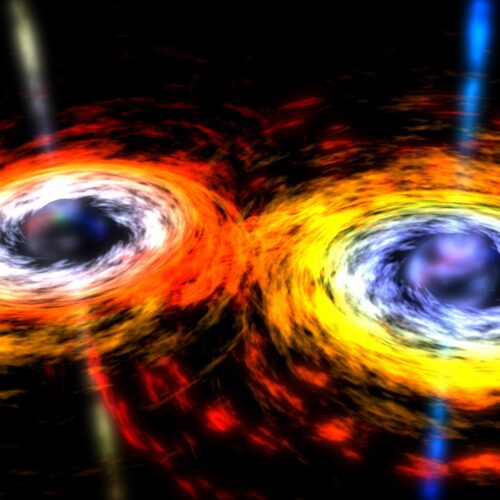
Many of the early exoplanet discoveries were exciting on their own, confirming that there really were strange new worlds out in the Universe. But over time, our focus has shifted more toward numbers, as we began using the frequency of objects like super-Earths and mini-Neptunes to learn more about how planets form. With four gravitational wave detectors now having generated years of data, we may be on the verge of seeing something similar happen with black hole mergers. On Wednesday, researchers released an analysis suggesting that there's a "mass gap" in the population of black holes that we've detected so far. And that gap supports the idea that some stars are so massive that they die in something called a pair-instability supernova, which is so violent that it leaves nothing but debris behind. That's not stable Black holes result from the collapse of a star's core during a supernova. While the outer layers of a star explode outward, the innermost layers plunge inward, funneling a fraction of the star's mass into the black hole (or neutron star if the star's mass is too small). We're not sure what the upper limit on a star's mass is, so you might naively think the distribution of black hole masses tails off gently. Read full article Comments
Stay on the signal
Follow LIGO data hints at supernovae so powerful they leave nothing behind
Follow this story beyond a single article: new follow-ups, adjacent sources, and the evolving storyline.
Story map
Understand this topic fast
A quick entry into the story: why it matters now, who is involved, and where to go next for context.
Why it matters now
Topic constellation
Open the live map for this story
See which entities, story threads, sources, and follow-up articles shape this story right now.
Click nodes to continue
Story timeline
Continue with this story
A short sequence of events and follow-up stories to understand the arc quickly.
How reliable this looks
Signal and trust for Ars Technica
This source works at a rapid pace: 100% of recent stories land in the hot window, and 0% carry visible search signal.
Reliability
92
Freshness
100
Sources in storyline
2
Related articles
More stories that share tags, source, or category context.
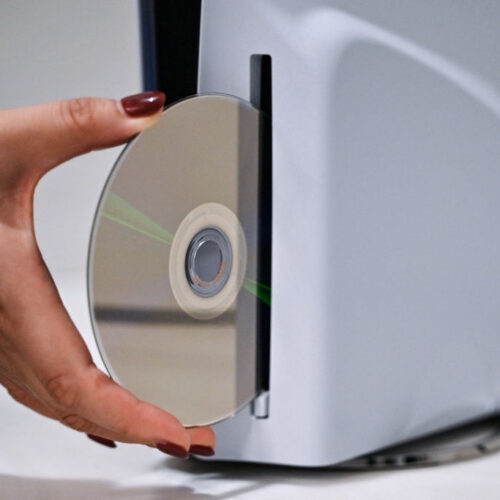
Sony will stop making physical copies of PlayStation games in 2028
“We will own nothing, it's truly sad.”
Signal weather
Momentum is building quickly, so this card is a good early entry point into the topic.
Why now
Fresh coverage with immediate momentum.

Ithaca's king defies the gods in final The Odyssey trailer
"You gods don't speak in ways we understand."
Signal weather
Momentum is building quickly, so this card is a good early entry point into the topic.
Why now
Fresh coverage with immediate momentum.
After spooking Trump into safety testing, Anthropic AI models get global release
US lifts curbs on Anthropic’s advanced Fable and Mythos models.
Signal weather
Momentum is building quickly, so this card is a good early entry point into the topic.
Why now
Fresh coverage with immediate momentum.
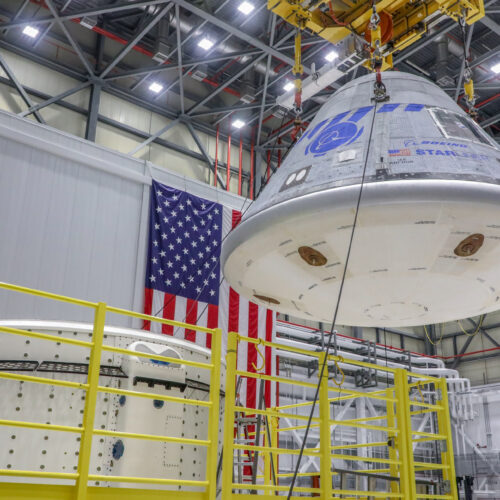
NASA inspector general suggests Boeing's Starliner will now be a decade late
Starliner's certification may be delayed to 2027, 10 years later than Boeing's original schedule.
Signal weather
Momentum is building quickly, so this card is a good early entry point into the topic.
Why now
Fresh coverage with immediate momentum.
More from Ars Technica
Fresh reporting and follow-up coverage from the same newsroom.
Sony will stop making physical copies of PlayStation games in 2028
“We will own nothing, it's truly sad.”
Signal weather
Momentum is building quickly, so this card is a good early entry point into the topic.
Why now
Fresh coverage with immediate momentum.

A good little EV you won't be able to buy soon: The Volvo EX30 Cross Country
Tariffs and anti-China policies killed this little Volvo in the United States.
Signal weather
Momentum is building quickly, so this card is a good early entry point into the topic.
Why now
Fresh coverage with immediate momentum.
Ithaca's king defies the gods in final The Odyssey trailer
"You gods don't speak in ways we understand."
Signal weather
Momentum is building quickly, so this card is a good early entry point into the topic.
Why now
Fresh coverage with immediate momentum.
After spooking Trump into safety testing, Anthropic AI models get global release
US lifts curbs on Anthropic’s advanced Fable and Mythos models.
Signal weather
Momentum is building quickly, so this card is a good early entry point into the topic.
Why now
Fresh coverage with immediate momentum.