NASA's Psyche spacecraft returns unfamiliar views of a familiar world
"As a bonus, it captured Mars images from a rare perspective."
Signal weather
Rising
Momentum is building quickly, so this card is a good early entry point into the topic.
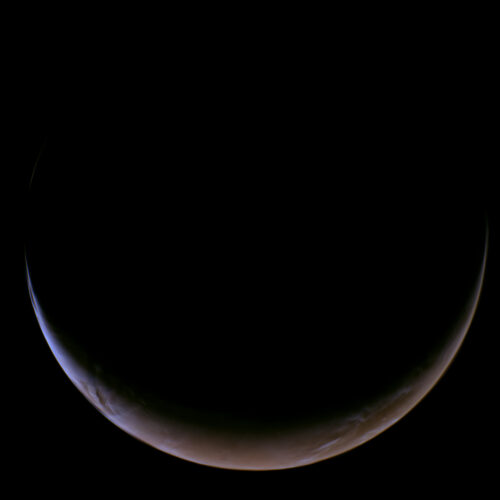
Not quite halfway through a six-year sojourn through the Solar System, a NASA spacecraft used a close encounter with Mars last week as a dress rehearsal for its arrival at the Solar System's largest metal asteroid in 2029. The Psyche mission launched more than two-and-a-half years ago, in October 2023, from Kennedy Space Center, Florida, to kick off a journey of some 2.2 billion miles (3.6 billion km) to reach its unexplored namesake, the asteroid Psyche. The robotic research mission got an initial lift from a powerful SpaceX Falcon Heavy rocket. It uses plasma engines to gradually build up the impulse needed to reach its destination in the asteroid belt, between the orbits of Mars and Jupiter. A flyby of Mars last Friday gave the spacecraft its most significant boost since launch. Navigators at NASA's Jet Propulsion Laboratory in California set up the spacecraft for a course taking it 2,864 miles (4,609 km) from the Martian surface, well above the planet's tenuous atmosphere. Psyche used Martian gravity like a slingshot to gain enough speed to reshape its orbit around the Sun, putting the probe on a path to intercept its asteroid target. Read full article Comments
Stay on the signal
Follow NASA's Psyche spacecraft returns unfamiliar views of a familiar world
Follow this story beyond a single article: new follow-ups, adjacent sources, and the evolving storyline.
Story map
Understand this topic fast
A quick entry into the story: why it matters now, who is involved, and where to go next for context.
Why it matters now
Topic constellation
Open the live map for this story
See which entities, story threads, sources, and follow-up articles shape this story right now.
Click nodes to continue
Entity pages
Story timeline
Continue with this story
A short sequence of events and follow-up stories to understand the arc quickly.
How reliable this looks
Signal and trust for Ars Technica
This source works at a rapid pace: 100% of recent stories land in the hot window, and 0% carry visible search signal.
Reliability
92
Freshness
100
Sources in storyline
1
Related articles
More stories that share tags, source, or category context.

Trump admin didn't want Ebola-exposed Americans, sent them to Berlin, Prague
Officials denied refusing entry, but dodged questions on why Americans didn't return.
Signal weather
Momentum is building quickly, so this card is a good early entry point into the topic.
Why now
Fresh coverage with immediate momentum.

Masters of the Universe final trailer brings the '80s nostalgia
"You are he who will restore peace to Eternia."
Signal weather
Momentum is building quickly, so this card is a good early entry point into the topic.
Why now
Fresh coverage with immediate momentum.
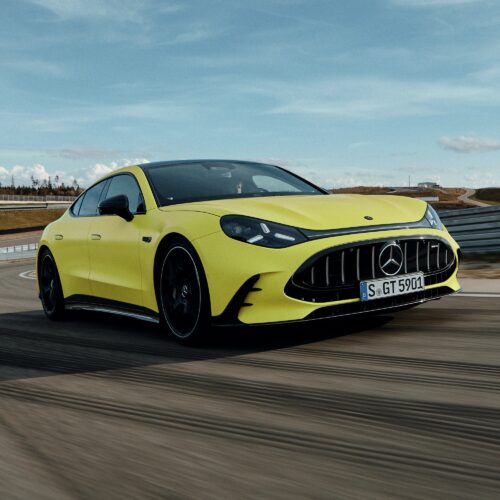
Leaving the V8 in the past: The all-electric Mercedes-AMG GT 4-Door
The 0–60 time is impressive, the miles/kWh number even more so.
Signal weather
Momentum is building quickly, so this card is a good early entry point into the topic.
Why now
Fresh coverage with immediate momentum.

Google publishes exploit code threatening millions of Chromium users
Google publishes exploit code before patch, reported 29 months earlier, is fixed.
Signal weather
Momentum is building quickly, so this card is a good early entry point into the topic.
Why now
Fresh coverage with immediate momentum.
More from Ars Technica
Fresh reporting and follow-up coverage from the same newsroom.
Trump admin didn't want Ebola-exposed Americans, sent them to Berlin, Prague
Officials denied refusing entry, but dodged questions on why Americans didn't return.
Signal weather
Momentum is building quickly, so this card is a good early entry point into the topic.
Why now
Fresh coverage with immediate momentum.
Masters of the Universe final trailer brings the '80s nostalgia
"You are he who will restore peace to Eternia."
Signal weather
Momentum is building quickly, so this card is a good early entry point into the topic.
Why now
Fresh coverage with immediate momentum.
Leaving the V8 in the past: The all-electric Mercedes-AMG GT 4-Door
The 0–60 time is impressive, the miles/kWh number even more so.
Signal weather
Momentum is building quickly, so this card is a good early entry point into the topic.
Why now
Fresh coverage with immediate momentum.
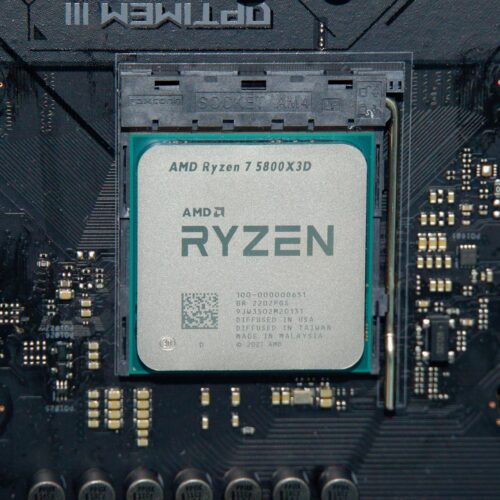
"Ryzen 5800X3D 10th Anniversary Edition" may help you avoid paying for a new PC
It could be one way to make your old PC play nicely with a high-end GPU.
Signal weather
Momentum is building quickly, so this card is a good early entry point into the topic.
Why now
Fresh coverage with immediate momentum.