Physicists think they've resolved the proton size puzzle
"We believe this is the final nail in the coffin of the proton radius puzzle."
Signal weather
Stable
The story has moved beyond the first headline and now acts as a reliable context anchor.
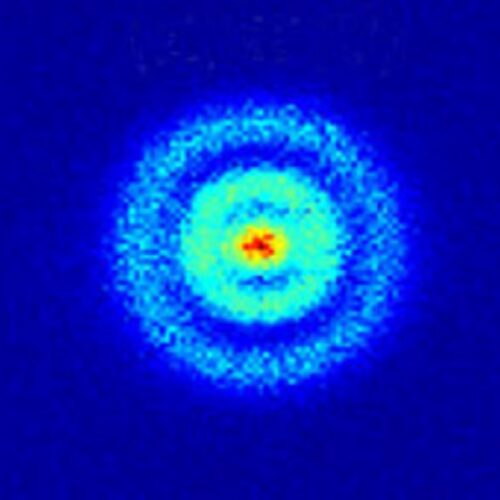
There has been considerable debate among physicists over the last 15 years about conflicting measurements of the charge radius of a hydrogen atom's proton—some confirming the predictions of our strongest theoretical models, others suggesting it was smaller than expected. The discrepancy hinted at possible exciting new physics. Now the debate seems to be winding down with the latest experimental measurements, described in two recent papers published in the journals Nature and Physical Review Letters, respectively. And the evidence has tilted in favor of a smaller proton radius and against new physics. "We believe this is the final nail in the coffin of the proton radius puzzle," Lothar Maisenbacher, of the University of California, Berkeley, who co-authored the Nature paper, told Ars. As previously reported, most popularizations discussing the structure of the atom rely on the much-maligned Bohr model, in which electrons move around the nucleus in circular orbits. But quantum mechanics gives us a much more precise (albeit weirder) description. The electrons aren’t really orbiting the nucleus; they are technically waves that take on particle-like properties when we do an experiment to determine their position. While orbiting an atom, they exist in a superposition of states, both particle and wave, with a wave function encompassing all the probabilities of its position at once. A measurement will collapse the wave function, giving us the electron’s position. Make a series of such measurements and plot the various positions that result, and it will yield something akin to a fuzzy orbit-like pattern. Read full article Comments
Stay on the signal
Follow Physicists think they've resolved the proton size puzzle
Follow this story beyond a single article: new follow-ups, adjacent sources, and the evolving storyline.
Story map
Understand this topic fast
A quick entry into the story: why it matters now, who is involved, and where to go next for context.
Why it matters now
Topic constellation
Open the live map for this story
See which entities, story threads, sources, and follow-up articles shape this story right now.
Click nodes to continue
Entity pages
Story timeline
Continue with this story
A short sequence of events and follow-up stories to understand the arc quickly.
How reliable this looks
Signal and trust for Ars Technica
This source works at a rapid pace: 100% of recent stories land in the hot window, and 0% carry visible search signal.
Reliability
92
Freshness
100
Sources in storyline
1
Related articles
More stories that share tags, source, or category context.

Netflix trying to "poison regulators" about WBD merger, Paramount lawyer claims
Netflix's response: "Absurd."
Signal weather
Momentum is building quickly, so this card is a good early entry point into the topic.
Why now
Fresh coverage with immediate momentum.

Anthropic says these topics are too dangerous to let its Fable 5 model talk about
New frontier model refuses cybersecurity, biology, and chemistry queries.
Signal weather
Momentum is building quickly, so this card is a good early entry point into the topic.
Why now
Fresh coverage with immediate momentum.
Google announces Gemini 3.5 Live Translate for instant voice-to-voice translation
Voice translations preserve speaker's tone, pacing, pitch—with SynthID watermarks for security.
Signal weather
Momentum is building quickly, so this card is a good early entry point into the topic.
Why now
Fresh coverage with immediate momentum.
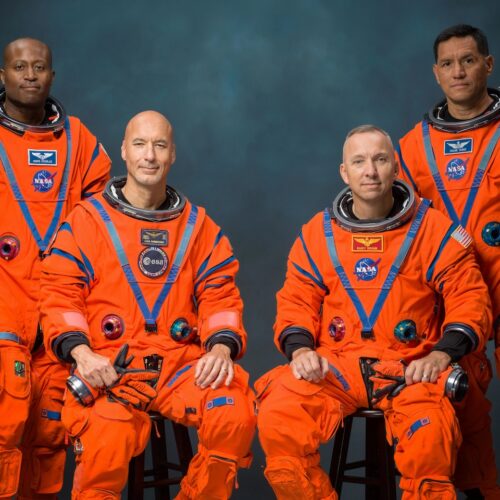
NASA assigns crew for Artemis III, sets aggressive timeline for flying it
"Artemis III will be an extraordinary demonstration of what is possible."
Signal weather
Momentum is building quickly, so this card is a good early entry point into the topic.
Why now
Fresh coverage with immediate momentum.
More from Ars Technica
Fresh reporting and follow-up coverage from the same newsroom.
Netflix trying to "poison regulators" about WBD merger, Paramount lawyer claims
Netflix's response: "Absurd."
Signal weather
Momentum is building quickly, so this card is a good early entry point into the topic.
Why now
Fresh coverage with immediate momentum.
Anthropic says these topics are too dangerous to let its Fable 5 model talk about
New frontier model refuses cybersecurity, biology, and chemistry queries.
Signal weather
Momentum is building quickly, so this card is a good early entry point into the topic.
Why now
Fresh coverage with immediate momentum.
Google announces Gemini 3.5 Live Translate for instant voice-to-voice translation
Voice translations preserve speaker's tone, pacing, pitch—with SynthID watermarks for security.
Signal weather
Momentum is building quickly, so this card is a good early entry point into the topic.
Why now
Fresh coverage with immediate momentum.
NASA assigns crew for Artemis III, sets aggressive timeline for flying it
"Artemis III will be an extraordinary demonstration of what is possible."
Signal weather
Momentum is building quickly, so this card is a good early entry point into the topic.
Why now
Fresh coverage with immediate momentum.