Quantum computers need vastly fewer resources than thought to break vital encryption
No, the sky isn't falling, but Q Day is coming, and it won't be as expensive as thought.
Signal weather
Stable
The story has moved beyond the first headline and now acts as a reliable context anchor.
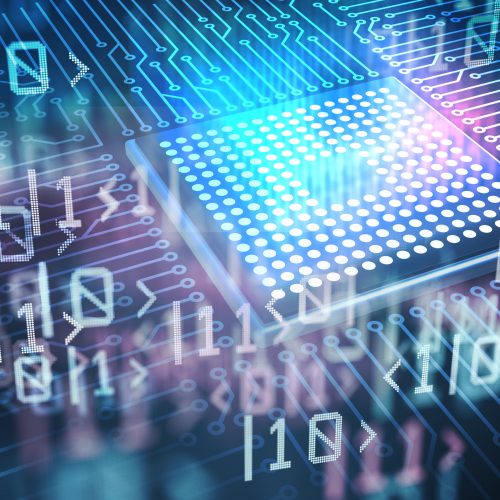
Building a utility-scale quantum computer that can crack one of the most vital cryptosystems—elliptic curves—doesn’t require nearly the resources anticipated just a year or two ago, two independently written whitepapers have concluded. In one, researchers demonstrated the use of neutral atoms as reconfigurable qubits that have free access to each other. They went on to show this approach could allow a quantum computer to break 256-bit elliptic-curve cryptography (ECC) in 10 days while using 100 times less overhead than previously estimated. In a second paper, Google researchers demonstrated how to break ECC-securing blockchains for bitcoin and other cryptocurrencies in less than nine minutes while achieving a 20-fold resource reduction. Taken together, the papers are the latest sign that cryptographically relevant quantum computing (CRQC) at utility-scale is making meaningful progress. The advances are largely being driven by new quantum architectures developed by physicists and computer scientists in a push to create quantum computers that operate correctly even in the presence of errors that occur whenever qubits—the quantum analog to classical computing bits—interact with their environment. The other key drivers are ever-more efficient algorithms to supercharge Shor’s algorithm, the 1994 series of equations proving that quantum computing could break the ECC and RSA cryptosystems in polynomial time, specifically cubic time, far faster than the exponential time provided by today’s classical computers. Neither paper has been peer-reviewed. Read full article Comments
Stay on the signal
Follow Quantum computers need vastly fewer resources than thought to break vital encryption
Follow this story beyond a single article: new follow-ups, adjacent sources, and the evolving storyline.
Story map
Understand this topic fast
A quick entry into the story: why it matters now, who is involved, and where to go next for context.
Why it matters now
Topic constellation
Open the live map for this story
See which entities, story threads, sources, and follow-up articles shape this story right now.
Click nodes to continue
Entity pages
Story timeline
Continue with this story
A short sequence of events and follow-up stories to understand the arc quickly.
How reliable this looks
Signal and trust for Ars Technica
This source works at a rapid pace: 100% of recent stories land in the hot window, and 0% carry visible search signal.
Reliability
92
Freshness
100
Sources in storyline
1
Related articles
More stories that share tags, source, or category context.

June research roundup: 6 cool science stories we almost missed
Also, the science of poop's distinctive shape, boron buckyballs, and the secret to a soccer feint.
Signal weather
Momentum is building quickly, so this card is a good early entry point into the topic.
Why now
Fresh coverage with immediate momentum.

Reddit will require you to log in to use old.reddit.com
Logged-out Old Reddit access is “significant source of abusive scraping."
Signal weather
Momentum is building quickly, so this card is a good early entry point into the topic.
Why now
Fresh coverage with immediate momentum.
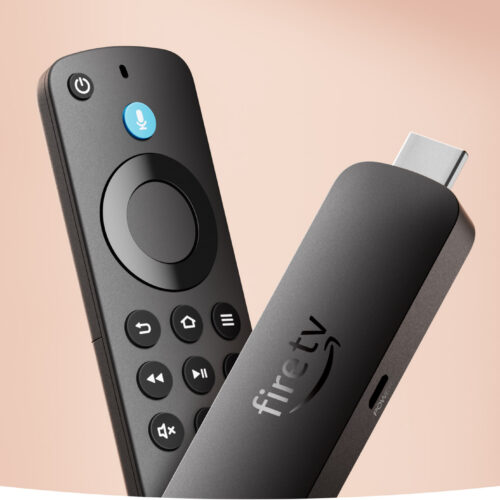
Amazon blames piracy apps with malware for killing new Fire Stick sideloading
New Fire Stick OS helps Amazon block third-party homepage launchers, ad blockers.
Signal weather
Momentum is building quickly, so this card is a good early entry point into the topic.
Why now
Fresh coverage with immediate momentum.
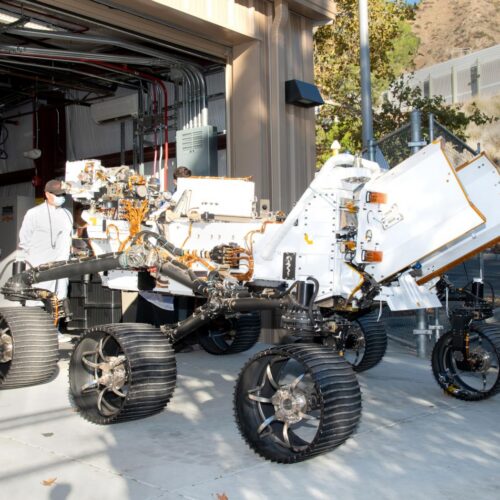
NASA may send a backup, nuclear-powered Mars rover to the Moon
"That would be an awesome capability."
Signal weather
Momentum is building quickly, so this card is a good early entry point into the topic.
Why now
Fresh coverage with immediate momentum.
More from Ars Technica
Fresh reporting and follow-up coverage from the same newsroom.
June research roundup: 6 cool science stories we almost missed
Also, the science of poop's distinctive shape, boron buckyballs, and the secret to a soccer feint.
Signal weather
Momentum is building quickly, so this card is a good early entry point into the topic.
Why now
Fresh coverage with immediate momentum.
Reddit will require you to log in to use old.reddit.com
Logged-out Old Reddit access is “significant source of abusive scraping."
Signal weather
Momentum is building quickly, so this card is a good early entry point into the topic.
Why now
Fresh coverage with immediate momentum.
Amazon blames piracy apps with malware for killing new Fire Stick sideloading
New Fire Stick OS helps Amazon block third-party homepage launchers, ad blockers.
Signal weather
Momentum is building quickly, so this card is a good early entry point into the topic.
Why now
Fresh coverage with immediate momentum.
NASA may send a backup, nuclear-powered Mars rover to the Moon
"That would be an awesome capability."
Signal weather
Momentum is building quickly, so this card is a good early entry point into the topic.
Why now
Fresh coverage with immediate momentum.