Research roundup: 6 cool science stories we almost missed
Crushing soda cans for science, why dolphins swim so fast, how urine helps mushrooms communicate, and more.
Signal weather
Stable
The story has moved beyond the first headline and now acts as a reliable context anchor.
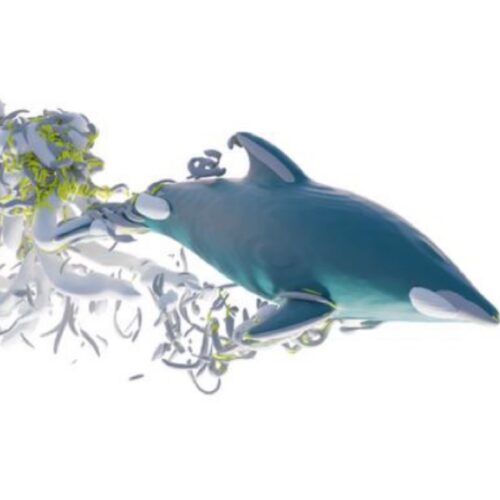
It’s a regrettable reality that there is never enough time to cover all the interesting scientific stories we come across. So every month, we highlight a handful of the best stories that nearly slipped through the cracks. April’s list includes tracking Roman ship repairs, the discovery that mushrooms can detect human urine, crushing soda cans for science, and the physics of why dolphins can swim so fast. Physics of why dolphins swim so fast Dolphins are very good swimmers, but the exact mechanisms by which they achieve their impressive speed and agility in water have remained murky. Japanese scientists from the University of Osaka ran multiple supercomputer simulations to learn more about how dolphins optimize their propulsion and found it has to do with the vortices, or eddies, produced by dolphin kicks, according to a paper published in the journal Physical Review Fluids. Per the authors, when dolphins flap their tails up and down, the kicking motion pushes water backward and produces swirling currents of varying sizes. The computer simulations enabled the team to break down those different sizes, revealing that the initial tail oscillations produce large vortex rings that generate thrust, and those larger ones then produce many more smaller vortices. However, the smaller ones don't contribute to the forward motion. Read full article Comments
Stay on the signal
Follow Research roundup: 6 cool science stories we almost missed
Follow this story beyond a single article: new follow-ups, adjacent sources, and the evolving storyline.
Story map
Understand this topic fast
A quick entry into the story: why it matters now, who is involved, and where to go next for context.
Why it matters now
Topic constellation
Open the live map for this story
See which entities, story threads, sources, and follow-up articles shape this story right now.
Click nodes to continue
Story timeline
Continue with this story
A short sequence of events and follow-up stories to understand the arc quickly.
How reliable this looks
Signal and trust for Ars Technica
This source works at a rapid pace: 100% of recent stories land in the hot window, and 0% carry visible search signal.
Reliability
92
Freshness
100
Sources in storyline
1
Related articles
More stories that share tags, source, or category context.

White House drastically shortens deadline for dropping quantum-vulnerable crypto
Order warns of national security risks if post-quantum cryptography isn't adopted in time.
Signal weather
Momentum is building quickly, so this card is a good early entry point into the topic.
Why now
Fresh coverage with immediate momentum.
US's climate.gov site, taken down by Trump, relaunched by nonprofit
Climate.us has now restored everything taken down by the government.
Signal weather
Momentum is building quickly, so this card is a good early entry point into the topic.
Why now
Fresh coverage with immediate momentum.
Odd police video shows drone removing knife from motionless suspect
Promo video comes as more US police departments fly drones as first responders.
Signal weather
Momentum is building quickly, so this card is a good early entry point into the topic.
Why now
Fresh coverage with immediate momentum.

A curious crossover: The Toyota C-HR review
Although it's on the smaller side, this electric vehicle is not very chill.
Signal weather
Momentum is building quickly, so this card is a good early entry point into the topic.
Why now
Fresh coverage with immediate momentum.
More from Ars Technica
Fresh reporting and follow-up coverage from the same newsroom.
White House drastically shortens deadline for dropping quantum-vulnerable crypto
Order warns of national security risks if post-quantum cryptography isn't adopted in time.
Signal weather
Momentum is building quickly, so this card is a good early entry point into the topic.
Why now
Fresh coverage with immediate momentum.
US's climate.gov site, taken down by Trump, relaunched by nonprofit
Climate.us has now restored everything taken down by the government.
Signal weather
Momentum is building quickly, so this card is a good early entry point into the topic.
Why now
Fresh coverage with immediate momentum.
Odd police video shows drone removing knife from motionless suspect
Promo video comes as more US police departments fly drones as first responders.
Signal weather
Momentum is building quickly, so this card is a good early entry point into the topic.
Why now
Fresh coverage with immediate momentum.

Oracle’s 21,000 layoffs help drive its debt-fueled AI investments
Oracle is spending billions on data center infrastructure to support AI.
Signal weather
Momentum is building quickly, so this card is a good early entry point into the topic.
Why now
Fresh coverage with immediate momentum.
More coverage around this story
Related reporting and closely matched stories around the same topic.

Research roundup: 7 cool science stories we almost missed
Sperm gets lost in space; raccoons solve puzzles; the physics of folding a crepe; and more.
Signal weather
The story has moved beyond the first headline and now acts as a reliable context anchor.
Why now
This story is still moving and pulling follow-up coverage.