RIP social media. What comes next is messy.
As social media splinters, how can we keep the new online spaces from devolving into toxic pits of despair?
Signal weather
Stable
The story has moved beyond the first headline and now acts as a reliable context anchor.

Last fall, we featured an extensive interview with Petter Törnberg of the University of Amsterdam, who studies the underlying mechanisms of social media that give rise to its worst aspects: the partisan echo chambers, the concentration of influence among a small group of elite users (attention inequality), and the amplification of the most extreme divisive voices. He wasn't optimistic about social media's future. Törnberg's research showed that, while numerous platform-level intervention strategies have been proposed to combat these issues, none are likely to be effective. And it’s not the fault of much-hated algorithms, non-chronological feeds, or our human proclivity for seeking out negativity. Rather, the dynamics that give rise to all those negative outcomes are structurally embedded in the very architecture of social media. So we’re probably doomed to endless toxic feedback loops unless someone hits upon a brilliant fundamental redesign that manages to change those dynamics. Törnberg has been very busy since then, producing two new papers and one new preprint building on this realization that social media is structured quite differently than the physical world, with unexpected downstream consequences. The first new paper, published in PLoS ONE, specifically focused on the echo chamber effect, using the same combined standard agent-based modeling with large language models (LLMs)—essentially creating little AI personas to simulate online social media behavior. Read full article Comments
Stay on the signal
Follow RIP social media. What comes next is messy.
Follow this story beyond a single article: new follow-ups, adjacent sources, and the evolving storyline.
Story map
Understand this topic fast
A quick entry into the story: why it matters now, who is involved, and where to go next for context.
Why it matters now
Topic constellation
Open the live map for this story
See which entities, story threads, sources, and follow-up articles shape this story right now.
Click nodes to continue
Entity pages
Story timeline
Continue with this story
A short sequence of events and follow-up stories to understand the arc quickly.
How reliable this looks
Signal and trust for Ars Technica
This source works at a rapid pace: 100% of recent stories land in the hot window, and 0% carry visible search signal.
Reliability
92
Freshness
100
Sources in storyline
1
Related articles
More stories that share tags, source, or category context.
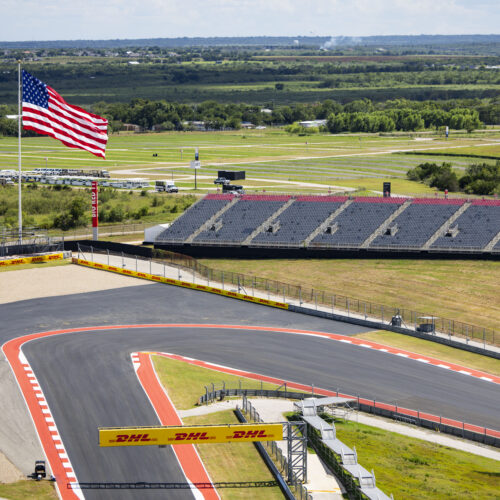
Formula E reveals first calendar for GEN4 with lots of real race tracks
Brands Hatch, COTA, and Zandvoort will all hold an e-Prix in 2027.
Signal weather
Momentum is building quickly, so this card is a good early entry point into the topic.
Why now
Fresh coverage with immediate momentum.

Google starts lowering Play Store fees, making good on Epic Games settlement
A few additional markets will get the lower fees this year ahead of a global rollout in 2027.
Signal weather
Momentum is building quickly, so this card is a good early entry point into the topic.
Why now
Fresh coverage with immediate momentum.

Elon Musk denies Tesla’s Autopilot caused crash that killed grandmother
Tesla, accused of failing to fix design flaws, blames driver pressing accelerator.
Signal weather
Momentum is building quickly, so this card is a good early entry point into the topic.
Why now
Fresh coverage with immediate momentum.
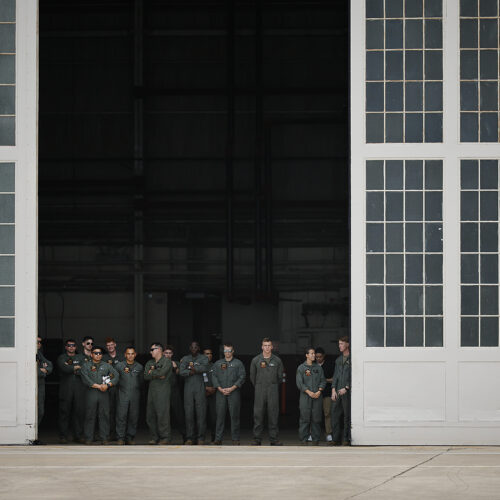
Military branches restore flu shot requirement after virus swept through base
Branches received exceptions to Hegseth's policy that made the shot optional.
Signal weather
Momentum is building quickly, so this card is a good early entry point into the topic.
Why now
Fresh coverage with immediate momentum.
More from Ars Technica
Fresh reporting and follow-up coverage from the same newsroom.
Formula E reveals first calendar for GEN4 with lots of real race tracks
Brands Hatch, COTA, and Zandvoort will all hold an e-Prix in 2027.
Signal weather
Momentum is building quickly, so this card is a good early entry point into the topic.
Why now
Fresh coverage with immediate momentum.
Google starts lowering Play Store fees, making good on Epic Games settlement
A few additional markets will get the lower fees this year ahead of a global rollout in 2027.
Signal weather
Momentum is building quickly, so this card is a good early entry point into the topic.
Why now
Fresh coverage with immediate momentum.
Elon Musk denies Tesla’s Autopilot caused crash that killed grandmother
Tesla, accused of failing to fix design flaws, blames driver pressing accelerator.
Signal weather
Momentum is building quickly, so this card is a good early entry point into the topic.
Why now
Fresh coverage with immediate momentum.
Military branches restore flu shot requirement after virus swept through base
Branches received exceptions to Hegseth's policy that made the shot optional.
Signal weather
Momentum is building quickly, so this card is a good early entry point into the topic.
Why now
Fresh coverage with immediate momentum.