Severed sea cucumber appendages don't seem to die
They seem to reorganize their tissues and then just keep living.
Signal weather
Rising
Momentum is building quickly, so this card is a good early entry point into the topic.
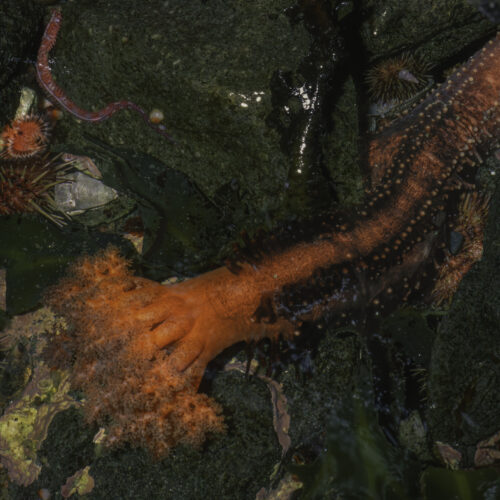
Organs, arms, appendages, and other complex tissues usually decay rapidly when they’re separated from their host. Over the years, biologists have seen some success with keeping them alive outside of the body—organ transplants depend on it—but it has always required germ-free environments and nutrient-rich mediums filled with growth factors. Now, though, scientists have discovered bits of tissue removed from a species of sea cucumber called Psolus fabricii can keep on living indefinitely if they’re left in ordinary seawater. “This is naturally occurring tissue immortality,” said Sara Jobson, a researcher at Memorial University of Newfoundland and lead author of the study. “Having tissues that survive that easily is unheard of. We’ve never seen anything like this.” The beginning of LiPfe Psolus fabricii is a species of sea cucumber that lives in the cold waters of the Atlantic and Arctic oceans. Its bottom side, known as a sole, is soft and ringed by a band of tube feet that it uses to grip rocks. Once on a rock, it extends soft, branching tentacles into the water to feed on suspended particles. Because these sea cucumbers inhabit harsh environments, their feet and tentacles experience high rates of injury and loss. Evolution has therefore endowed these sites with an incredibly high capacity for regeneration. Read full article Comments
Stay on the signal
Follow Severed sea cucumber appendages don't seem to die
Follow this story beyond a single article: new follow-ups, adjacent sources, and the evolving storyline.
Story map
Understand this topic fast
A quick entry into the story: why it matters now, who is involved, and where to go next for context.
Why it matters now
Topic constellation
Open the live map for this story
See which entities, story threads, sources, and follow-up articles shape this story right now.
Click nodes to continue
Story timeline
Continue with this story
A short sequence of events and follow-up stories to understand the arc quickly.
How reliable this looks
Signal and trust for Ars Technica
This source works at a rapid pace: 100% of recent stories land in the hot window, and 0% carry visible search signal.
Reliability
92
Freshness
100
Sources in storyline
1
Related articles
More stories that share tags, source, or category context.

Startup offers free home cleaning—if it can record it all for robot training
The latest twist in paying humans to wear head cameras for robot training data.
Signal weather
Momentum is building quickly, so this card is a good early entry point into the topic.
Why now
Fresh coverage with immediate momentum.

After years of stability, F1 reliability can no longer be taken for granted
Until recently, a driver had maybe a six in ten chance of finishing a race.
Signal weather
Momentum is building quickly, so this card is a good early entry point into the topic.
Why now
Fresh coverage with immediate momentum.
Rocket Report: A dark day for Blue Origin; Pentagon eyes new launch site
A new crew launched to China's Tiangong space station, and one of the astronauts will stay for a year.
Signal weather
Momentum is building quickly, so this card is a good early entry point into the topic.
Why now
Fresh coverage with immediate momentum.

Here's why the failure of Blue Origin's New Glenn rocket is so catastrophic
"I hope that it makes it far enough away from the pad that it does not cause pad damage."
Signal weather
Momentum is building quickly, so this card is a good early entry point into the topic.
Why now
Fresh coverage with immediate momentum.
More from Ars Technica
Fresh reporting and follow-up coverage from the same newsroom.
Startup offers free home cleaning—if it can record it all for robot training
The latest twist in paying humans to wear head cameras for robot training data.
Signal weather
Momentum is building quickly, so this card is a good early entry point into the topic.
Why now
Fresh coverage with immediate momentum.
After years of stability, F1 reliability can no longer be taken for granted
Until recently, a driver had maybe a six in ten chance of finishing a race.
Signal weather
Momentum is building quickly, so this card is a good early entry point into the topic.
Why now
Fresh coverage with immediate momentum.
Rocket Report: A dark day for Blue Origin; Pentagon eyes new launch site
A new crew launched to China's Tiangong space station, and one of the astronauts will stay for a year.
Signal weather
Momentum is building quickly, so this card is a good early entry point into the topic.
Why now
Fresh coverage with immediate momentum.
Here's why the failure of Blue Origin's New Glenn rocket is so catastrophic
"I hope that it makes it far enough away from the pad that it does not cause pad damage."
Signal weather
Momentum is building quickly, so this card is a good early entry point into the topic.
Why now
Fresh coverage with immediate momentum.