Study: AI models that consider users' feelings are more likely to make errors
Overtuning can cause models to "prioritize user satisfaction over truthfulness.”
Signal weather
Stable
The story has moved beyond the first headline and now acts as a reliable context anchor.
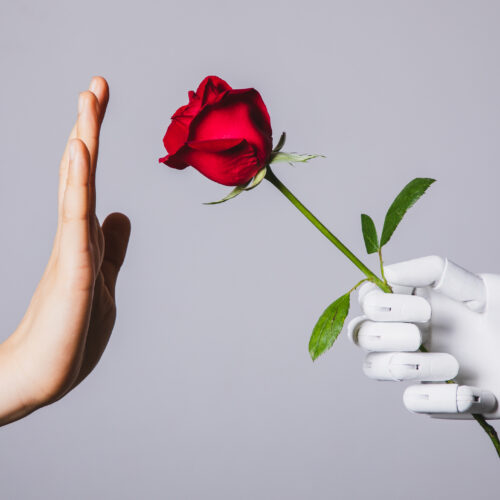
In human-to-human communication, the desire to be empathetic or polite often conflicts with the need to be truthful—hence terms like “being brutally honest” for situations where you value the truth over sparing someone’s feelings. Now, new research suggests that large language models can sometimes show a similar tendency when specifically trained to present a "warmer" tone for the user. In a new paper published this week in Nature, researchers from Oxford University’s Internet Institute found that specially tuned AI models tend to mimic the human tendency to occasionally “soften difficult truths” when necessary “to preserve bonds and avoid conflict.” These warmer models are also more likely to validate a user's expressed incorrect beliefs, the researchers found, especially when the user shares that they're feeling sad. How do you make an AI seem “warm”? In the study, the researchers defined the "warmness" of a language model based on "the degree to which its outputs lead users to infer positive intent, signaling trustworthiness, friendliness, and sociability." To measure the effect of those kinds of language patterns, the researchers used supervised fine-tuning techniques to modify four open-weights models (Llama-3.1-8B-Instruct, Mistral-Small-Instruct-2409, Qwen-2.5-32B-Instruct, Llama-3.1-70B-Instruct), and one proprietary model (GPT-4o).Read full article Comments
Stay on the signal
Follow Study: AI models that consider users' feelings are more likely to make errors
Follow this story beyond a single article: new follow-ups, adjacent sources, and the evolving storyline.
Story map
Understand this topic fast
A quick entry into the story: why it matters now, who is involved, and where to go next for context.
Why it matters now
Topic constellation
Open the live map for this story
See which entities, story threads, sources, and follow-up articles shape this story right now.
Click nodes to continue
Entity pages
Story timeline
Continue with this story
A short sequence of events and follow-up stories to understand the arc quickly.
How reliable this looks
Signal and trust for Ars Technica
This source works at a rapid pace: 100% of recent stories land in the hot window, and 0% carry visible search signal.
Reliability
92
Freshness
100
Sources in storyline
1
Related articles
More stories that share tags, source, or category context.
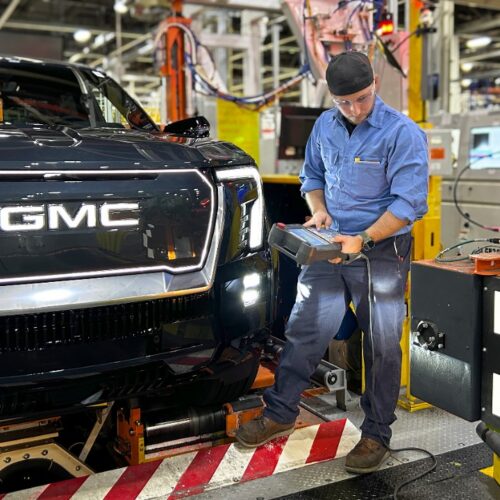
GM installs robots at flagship EV factory after laying off 1,300 workers
US autoworkers union warns of robot automation as dark factory future looms.
Signal weather
Momentum is building quickly, so this card is a good early entry point into the topic.
Why now
Fresh coverage with immediate momentum.
Man used massage gun on his tired eyeballs. It went as well as you'd expect.
He had retinal tears and bruises from squishing his eyeballs with the gun.
Signal weather
Momentum is building quickly, so this card is a good early entry point into the topic.
Why now
Fresh coverage with immediate momentum.

Polymarket's viral videos showed people winning big, but the bets were fake
"Winning" bets were made on cloned website and would have lost money, WSJ finds.
Signal weather
Momentum is building quickly, so this card is a good early entry point into the topic.
Why now
Fresh coverage with immediate momentum.

Following user outcry, AMD reinstates memory encryption in consumer CPUs
Critics saw the move as an underhanded way to steer them toward more costly chips.
Signal weather
Momentum is building quickly, so this card is a good early entry point into the topic.
Why now
Fresh coverage with immediate momentum.
More from Ars Technica
Fresh reporting and follow-up coverage from the same newsroom.
GM installs robots at flagship EV factory after laying off 1,300 workers
US autoworkers union warns of robot automation as dark factory future looms.
Signal weather
Momentum is building quickly, so this card is a good early entry point into the topic.
Why now
Fresh coverage with immediate momentum.
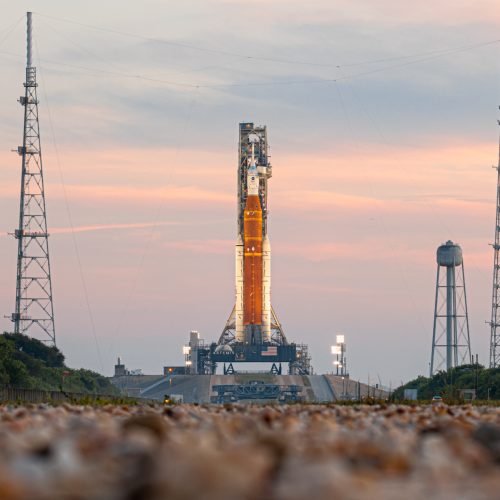
Report: Kennedy Space Center not ready for era of super heavy rockets
SpaceX has told NASA it plans to launch Starship every eight days from Kennedy.
Signal weather
Momentum is building quickly, so this card is a good early entry point into the topic.
Why now
Fresh coverage with immediate momentum.
Man used massage gun on his tired eyeballs. It went as well as you'd expect.
He had retinal tears and bruises from squishing his eyeballs with the gun.
Signal weather
Momentum is building quickly, so this card is a good early entry point into the topic.
Why now
Fresh coverage with immediate momentum.
Polymarket's viral videos showed people winning big, but the bets were fake
"Winning" bets were made on cloned website and would have lost money, WSJ finds.
Signal weather
Momentum is building quickly, so this card is a good early entry point into the topic.
Why now
Fresh coverage with immediate momentum.