Testing suggests Google's AI Overviews tell millions of lies per hour
Is 90 percent accuracy good enough for a search robot?
Signal weather
Stable
The story has moved beyond the first headline and now acts as a reliable context anchor.
Looking up information on Google today means confronting AI Overviews, the Gemini-powered search robot that appears at the top of the results page. AI Overviews has had a rough time since its 2024 launch, attracting user ire over its scattershot accuracy, but it's getting better and usually provides the right answer. That's a low bar, though. A new analysis from The New York Times attempted to assess the accuracy of AI Overviews, finding it's right 90 percent of the time. The flip side is that 1 in 10 AI answers is wrong, and for Google, that means hundreds of thousands of lies going out every minute of the day. The Times conducted this analysis with the help of a startup called Oumi, which itself is deeply involved in developing AI models. The company used AI tools to probe AI Overviews with the SimpleQA evaluation, a common test to rank the factuality of generative models like Gemini. Released by OpenAI in 2024, SimpleQA is essentially a list of more than 4,000 questions with verifiable answers that can be fed into an AI. Oumi began running its test last year when Gemini 2.5 was still the company's best model. At the time, the benchmark showed an 85 percent accuracy rate. When the test was rerun following the Gemini 3 update, AI Overviews answered 91 percent of the questions correctly. If you extrapolate this miss rate out to all Google searches, AI Overviews is generating tens of millions of incorrect answers per day. Read full article Comments
Stay on the signal
Follow Testing suggests Google's AI Overviews tell millions of lies per hour
Follow this story beyond a single article: new follow-ups, adjacent sources, and the evolving storyline.
Story map
Understand this topic fast
A quick entry into the story: why it matters now, who is involved, and where to go next for context.
Why it matters now
Topic constellation
Open the live map for this story
See which entities, story threads, sources, and follow-up articles shape this story right now.
Click nodes to continue
Entity pages
Story timeline
Continue with this story
A short sequence of events and follow-up stories to understand the arc quickly.
How reliable this looks
Signal and trust for Ars Technica
This source works at a rapid pace: 100% of recent stories land in the hot window, and 0% carry visible search signal.
Reliability
92
Freshness
100
Sources in storyline
1
Related articles
More stories that share tags, source, or category context.

macOS 27 requires Apple Silicon, as Apple draws down the Intel Mac era
You'll need an M1 or better to run the next release of macOS.
Signal weather
Momentum is building quickly, so this card is a good early entry point into the topic.
Why now
Fresh coverage with immediate momentum.

iOS 27 and iPadOS 27 don't drop support for any iPhones—and just a few iPads
This promises to be a solid release for aging iPhones.
Signal weather
Momentum is building quickly, so this card is a good early entry point into the topic.
Why now
Fresh coverage with immediate momentum.

Meta alleges NSO violated spyware injunction with new WhatsApp attacks
WhatsApp disrupted spear phishing attempts, asks court to hold NSO in contempt.
Signal weather
Momentum is building quickly, so this card is a good early entry point into the topic.
Why now
Fresh coverage with immediate momentum.
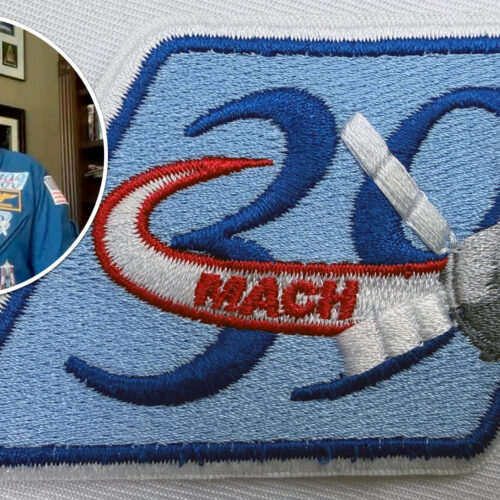
The fastest humans in the galaxy just got a spiffy patch to prove it
"It is actually challenging how you measure [Mach] from space."
Signal weather
Momentum is building quickly, so this card is a good early entry point into the topic.
Why now
Fresh coverage with immediate momentum.
More from Ars Technica
Fresh reporting and follow-up coverage from the same newsroom.
macOS 27 requires Apple Silicon, as Apple draws down the Intel Mac era
You'll need an M1 or better to run the next release of macOS.
Signal weather
Momentum is building quickly, so this card is a good early entry point into the topic.
Why now
Fresh coverage with immediate momentum.
iOS 27 and iPadOS 27 don't drop support for any iPhones—and just a few iPads
This promises to be a solid release for aging iPhones.
Signal weather
Momentum is building quickly, so this card is a good early entry point into the topic.
Why now
Fresh coverage with immediate momentum.
Meta alleges NSO violated spyware injunction with new WhatsApp attacks
WhatsApp disrupted spear phishing attempts, asks court to hold NSO in contempt.
Signal weather
Momentum is building quickly, so this card is a good early entry point into the topic.
Why now
Fresh coverage with immediate momentum.
The fastest humans in the galaxy just got a spiffy patch to prove it
"It is actually challenging how you measure [Mach] from space."
Signal weather
Momentum is building quickly, so this card is a good early entry point into the topic.
Why now
Fresh coverage with immediate momentum.