The physics of how Olympic weightlifters exploit barbell's "whip"
The type of bar matters when it comes to how it bends and recoils, but why is still a mystery.
Signal weather
Stable
The story has moved beyond the first headline and now acts as a reliable context anchor.

Olympic weightlifting consists of three basic movements performed on a barbell: the snatch, the clean, and the jerk (with the latter two executed in combination). At such an elite level, athletes seek to exploit every possible advantage, including how a barbell bends and recoils in response to loaded weight and applied force—a property known as flexural bending in physics and dubbed the "whip" by Olympic athletes. Scientists are learning more about the underlying mechanisms of the whip, according to a presentation at this week's meeting of the Acoustical Society of America in Philadelphia. Joshua Langlois, a graduate student at Pennsylvania State University, competes in Strongman competitions as a hobby. He also has friends who compete at the national level in Olympic weight-lifting events. "They told me how they use the whip," Langlois said during a media briefing. "When they dip down, they can feel when the bar flexes back up and use that to accelerate the movement upward to increase the amount they can lift." Langlois decided to conduct a modal analysis, i.e., how an object moves or vibrates, to quantify the whip and better understand the mechanics, as well as what makes for a good barbell at the elite level. He suspended four 20-kg men's barbells (women use 15-kg barbells)—with 50 kg loaded on each end—from elastic resistance bands so that the bar was essentially floating in space. Then he attached accelerometers at each end of the bar where the vibrational mode patterns occur. Next, he tapped set locations across the bar with a small hammer, measuring the acceleration at the endpoints, which enabled him to map out how the bars moved in response. He compared the vibrations of different barbells, as well as a single barbell loaded with different weights. Read full article Comments
Stay on the signal
Follow The physics of how Olympic weightlifters exploit barbell's "whip"
Follow this story beyond a single article: new follow-ups, adjacent sources, and the evolving storyline.
Story map
Understand this topic fast
A quick entry into the story: why it matters now, who is involved, and where to go next for context.
Why it matters now
Topic constellation
Open the live map for this story
See which entities, story threads, sources, and follow-up articles shape this story right now.
Click nodes to continue
Entity pages
Story timeline
Continue with this story
A short sequence of events and follow-up stories to understand the arc quickly.
How reliable this looks
Signal and trust for Ars Technica
This source works at a rapid pace: 100% of recent stories land in the hot window, and 0% carry visible search signal.
Reliability
92
Freshness
100
Sources in storyline
1
Related articles
More stories that share tags, source, or category context.
Why did this journal retract two 1940s papers by Max Planck?
Clicking on the links now reveals blank pages and empty PDFs. "Intellectually, it’s not acceptable.”
Signal weather
Momentum is building quickly, so this card is a good early entry point into the topic.
Why now
Fresh coverage with immediate momentum.

Apple and Audi alumni have made a luxe EV based on the moon buggy
The Amble One is a street-legal $25,000 electric buggy designed for luxury resorts.
Signal weather
Momentum is building quickly, so this card is a good early entry point into the topic.
Why now
Fresh coverage with immediate momentum.
South Korea plans to train entire military as "drone warriors"
Half-million strong military will train on drones as “universal combat tool.”
Signal weather
Momentum is building quickly, so this card is a good early entry point into the topic.
Why now
Fresh coverage with immediate momentum.
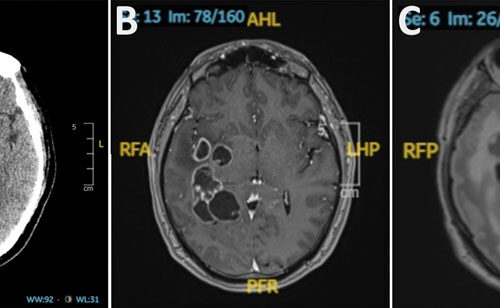
Doctors suspected man had brain cancer. He actually had worms.
His doctors went looking for cancer, then they saw the worms' heads.
Signal weather
Momentum is building quickly, so this card is a good early entry point into the topic.
Why now
Fresh coverage with immediate momentum.
More from Ars Technica
Fresh reporting and follow-up coverage from the same newsroom.
Why did this journal retract two 1940s papers by Max Planck?
Clicking on the links now reveals blank pages and empty PDFs. "Intellectually, it’s not acceptable.”
Signal weather
Momentum is building quickly, so this card is a good early entry point into the topic.
Why now
Fresh coverage with immediate momentum.
Apple and Audi alumni have made a luxe EV based on the moon buggy
The Amble One is a street-legal $25,000 electric buggy designed for luxury resorts.
Signal weather
Momentum is building quickly, so this card is a good early entry point into the topic.
Why now
Fresh coverage with immediate momentum.
South Korea plans to train entire military as "drone warriors"
Half-million strong military will train on drones as “universal combat tool.”
Signal weather
Momentum is building quickly, so this card is a good early entry point into the topic.
Why now
Fresh coverage with immediate momentum.
Doctors suspected man had brain cancer. He actually had worms.
His doctors went looking for cancer, then they saw the worms' heads.
Signal weather
Momentum is building quickly, so this card is a good early entry point into the topic.
Why now
Fresh coverage with immediate momentum.