US Space Command: Russia is now operationalizing co-orbital ASAT weapons
"They’re putting operational systems up within orbit reach of our high-value satellites."
Signal weather
Stable
The story has moved beyond the first headline and now acts as a reliable context anchor.
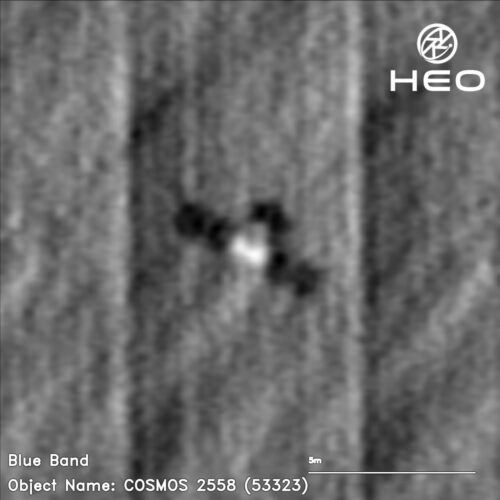
After several tests of unusual "nesting doll" satellites in low-Earth orbit, Russia is now fielding operational anti-satellite weapons with valuable US government satellites in their crosshairs, the four-star general leading US Space Command said this week. Gen. Stephen Whiting didn't name the system, but he was almost certainly referring to a Russian military program named Nivelir, which has launched four satellites shadowing US spy satellites owned by the National Reconnaissance Office in low-Earth orbit. After reaching orbit, the Nivelir satellites have released smaller ships to start their own maneuvers, and at least one of those lobbed a mystery object at high velocity during a test in 2020. US analysts concluded this was a projectile that could be fired at another satellite. US officials have compared the Nivelir architecture to a Matryoshka doll, or a Russian nesting doll, with an outer shell concealing smaller, unknown figures inside. Read full article Comments
Stay on the signal
Follow US Space Command: Russia is now operationalizing co-orbital ASAT weapons
Follow this story beyond a single article: new follow-ups, adjacent sources, and the evolving storyline.
Story map
Understand this topic fast
A quick entry into the story: why it matters now, who is involved, and where to go next for context.
Why it matters now
Topic constellation
Open the live map for this story
See which entities, story threads, sources, and follow-up articles shape this story right now.
Click nodes to continue
Story timeline
Continue with this story
A short sequence of events and follow-up stories to understand the arc quickly.
How reliable this looks
Signal and trust for Ars Technica
This source works at a rapid pace: 100% of recent stories land in the hot window, and 0% carry visible search signal.
Reliability
92
Freshness
100
Sources in storyline
1
Related articles
More stories that share tags, source, or category context.

macOS 27 requires Apple Silicon, as Apple draws down the Intel Mac era
You'll need an M1 or better to run the next release of macOS.
Signal weather
Momentum is building quickly, so this card is a good early entry point into the topic.
Why now
Fresh coverage with immediate momentum.

iOS 27 and iPadOS 27 don't drop support for any iPhones—and just a few iPads
This promises to be a solid release for aging iPhones.
Signal weather
Momentum is building quickly, so this card is a good early entry point into the topic.
Why now
Fresh coverage with immediate momentum.

Meta alleges NSO violated spyware injunction with new WhatsApp attacks
WhatsApp disrupted spear phishing attempts, asks court to hold NSO in contempt.
Signal weather
Momentum is building quickly, so this card is a good early entry point into the topic.
Why now
Fresh coverage with immediate momentum.
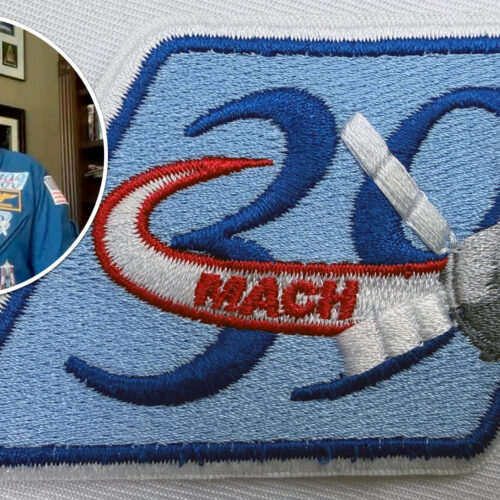
The fastest humans in the galaxy just got a spiffy patch to prove it
"It is actually challenging how you measure [Mach] from space."
Signal weather
Momentum is building quickly, so this card is a good early entry point into the topic.
Why now
Fresh coverage with immediate momentum.
More from Ars Technica
Fresh reporting and follow-up coverage from the same newsroom.
macOS 27 requires Apple Silicon, as Apple draws down the Intel Mac era
You'll need an M1 or better to run the next release of macOS.
Signal weather
Momentum is building quickly, so this card is a good early entry point into the topic.
Why now
Fresh coverage with immediate momentum.
iOS 27 and iPadOS 27 don't drop support for any iPhones—and just a few iPads
This promises to be a solid release for aging iPhones.
Signal weather
Momentum is building quickly, so this card is a good early entry point into the topic.
Why now
Fresh coverage with immediate momentum.
Meta alleges NSO violated spyware injunction with new WhatsApp attacks
WhatsApp disrupted spear phishing attempts, asks court to hold NSO in contempt.
Signal weather
Momentum is building quickly, so this card is a good early entry point into the topic.
Why now
Fresh coverage with immediate momentum.
The fastest humans in the galaxy just got a spiffy patch to prove it
"It is actually challenging how you measure [Mach] from space."
Signal weather
Momentum is building quickly, so this card is a good early entry point into the topic.
Why now
Fresh coverage with immediate momentum.