We keep finding the raw material of DNA in asteroids—what's it telling us?
This week's result is just the latest in a growing collection of discoveries.
Signal weather
Stable
The story has moved beyond the first headline and now acts as a reliable context anchor.
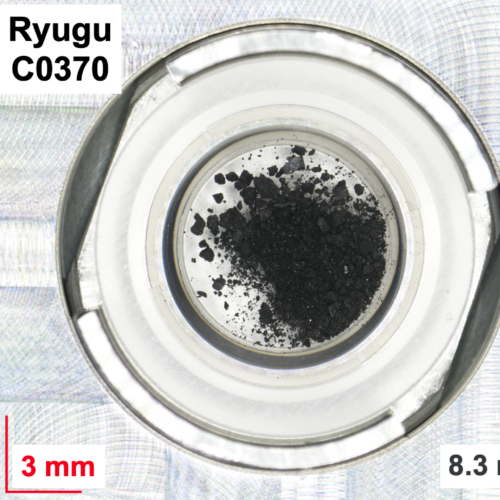
On Monday, a paper announcing that all four DNA bases had been found on an asteroid sparked a lot of headlines. But many of the headlines omitted a key word needed to put the discovery in context: "again." The paper itself cited similar results dating back to 2011, and the ensuing years have seen various confirmations and more rigorous studies. The new work was less notable for showing that we had found these bases in Ryugu than for solving a previous mystery: earlier studies had failed to detect them there, despite their presence in many other asteroid samples. Outside the headlines, though, the new work provides some interesting details, as it may answer an important question: how these bases got there in the first place. Understanding that better may be critical for getting a better picture of how the raw materials for life ended up on Earth in the first place. Searching for bases Let's start with a description of what the researchers found. Both DNA and RNA, the two nucleic acids used by life, share a similar structure. That includes the backbone, a chain that alternates between sugars and phosphates that are all chemically linked together. While the specific sugar differs between DNA and RNA, the chain itself varies only in length; otherwise, the backbone of every DNA or RNA molecule is identical. Read full article Comments
Stay on the signal
Follow We keep finding the raw material of DNA in asteroids—what's it telling us?
Follow this story beyond a single article: new follow-ups, adjacent sources, and the evolving storyline.
Story map
Understand this topic fast
A quick entry into the story: why it matters now, who is involved, and where to go next for context.
Why it matters now
Topic constellation
Open the live map for this story
See which entities, story threads, sources, and follow-up articles shape this story right now.
Click nodes to continue
Entity pages
Story timeline
Continue with this story
A short sequence of events and follow-up stories to understand the arc quickly.
How reliable this looks
Signal and trust for Ars Technica
This source works at a steady pace: 100% of recent stories land in the hot window, and 0% carry visible search signal.
Reliability
92
Freshness
100
Sources in storyline
1
Related articles
More stories that share tags, source, or category context.
Petition against Meta's employee training data collection for ML models
Comments
Signal weather
Momentum is building quickly, so this card is a good early entry point into the topic.
Why now
Fresh coverage with immediate momentum.
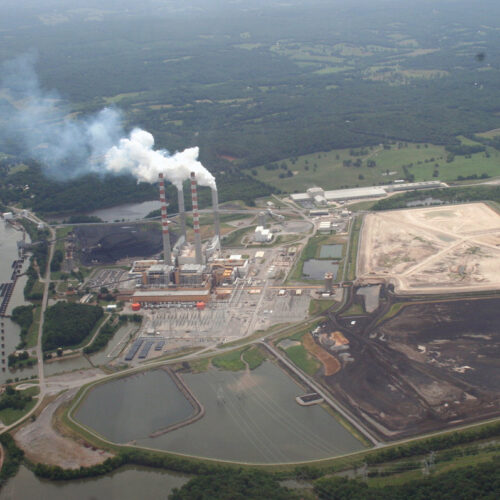
Trump admin’s coal investments assist plants with repeated violations
At least three coal plants have been repeatedly cited for violating environmental regulations.
Signal weather
Momentum is building quickly, so this card is a good early entry point into the topic.
Why now
Fresh coverage with immediate momentum.

Review: Widow's Bay is a boldly original take on comedic horror
An eminently binge-able series that honors classic horror tropes while reinventing them in surprising ways
Signal weather
Momentum is building quickly, so this card is a good early entry point into the topic.
Why now
Fresh coverage with immediate momentum.

The UK will scan asylum-seekers’ faces for age checks—despite knowing the tech is flawed
Tests of age-verification technology show the risks of life-altering errors.
Signal weather
Momentum is building quickly, so this card is a good early entry point into the topic.
Why now
Fresh coverage with immediate momentum.
More from Ars Technica
Fresh reporting and follow-up coverage from the same newsroom.
Trump admin’s coal investments assist plants with repeated violations
At least three coal plants have been repeatedly cited for violating environmental regulations.
Signal weather
Momentum is building quickly, so this card is a good early entry point into the topic.
Why now
Fresh coverage with immediate momentum.
Review: Widow's Bay is a boldly original take on comedic horror
An eminently binge-able series that honors classic horror tropes while reinventing them in surprising ways
Signal weather
Momentum is building quickly, so this card is a good early entry point into the topic.
Why now
Fresh coverage with immediate momentum.
The UK will scan asylum-seekers’ faces for age checks—despite knowing the tech is flawed
Tests of age-verification technology show the risks of life-altering errors.
Signal weather
Momentum is building quickly, so this card is a good early entry point into the topic.
Why now
Fresh coverage with immediate momentum.

Rocket Report: Rebuild begins at Blue Origin launch pad; Relativity targets Mars
A French launch startup is scrapping the name of its rocket, apparently due to a trademark issue.
Signal weather
Momentum is building quickly, so this card is a good early entry point into the topic.
Why now
Fresh coverage with immediate momentum.