When the ability to smell goes away
Disturbances in this critical sense are often linked to problems with brain health.
Signal weather
Rising
Momentum is building quickly, so this card is a good early entry point into the topic.
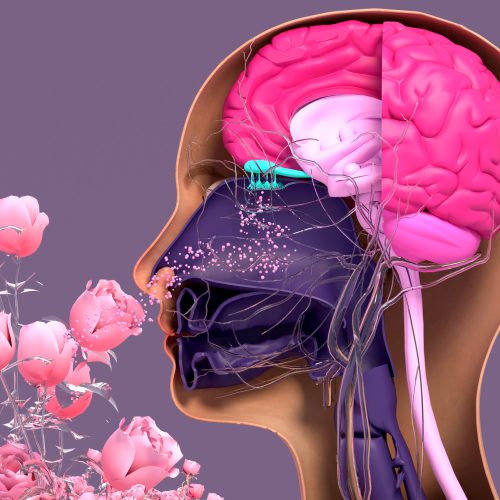
About 14 years ago, Chrissi Kelly lost her sense of smell. She had traveled to the Czech Republic to visit family and caught some virus. Months later, when she still couldn’t smell, she made the rounds to doctors, including her general practitioner and an ear, nose and throat specialist, trying to find answers. She was diagnosed with anosmia (smell loss), and like many patients with her condition, was told she’d have to learn to live with it. But for her, the loss was catastrophic. “After about six months of complete loss, I was just climbing the walls, and I did not feel like myself anymore,” she says. Researchers estimate that up to 22 percent of the population lives with smell impairments, like hyposmia (partial smell loss) or anosmia (complete smell loss). And many others live with smell disorders like phantosmia, in which a person picks up phantom smells, or parosmia, where typically pleasant scents like coffee or shampoo begin to register as highly unpleasant (think feces or vomit). Yet the conditions have been poorly understood, underdiagnosed and often minimized by clinicians. Read full article Comments
Stay on the signal
Follow When the ability to smell goes away
Follow this story beyond a single article: new follow-ups, adjacent sources, and the evolving storyline.
Story map
Understand this topic fast
A quick entry into the story: why it matters now, who is involved, and where to go next for context.
Why it matters now
Topic constellation
Open the live map for this story
See which entities, story threads, sources, and follow-up articles shape this story right now.
Click nodes to continue
Entity pages
Story timeline
Continue with this story
A short sequence of events and follow-up stories to understand the arc quickly.
How reliable this looks
Signal and trust for Ars Technica
This source works at a rapid pace: 100% of recent stories land in the hot window, and 0% carry visible search signal.
Reliability
92
Freshness
100
Sources in storyline
1
Related articles
More stories that share tags, source, or category context.
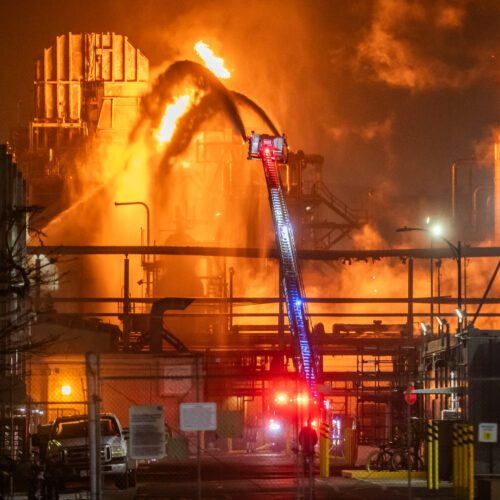
Chemical accidents rise as Trump administration proposes weakening safety rules
Chemicals from accidents that injured or killed people increased by nearly 50 percent in recent years.
Signal weather
Momentum is building quickly, so this card is a good early entry point into the topic.
Why now
Fresh coverage with immediate momentum.
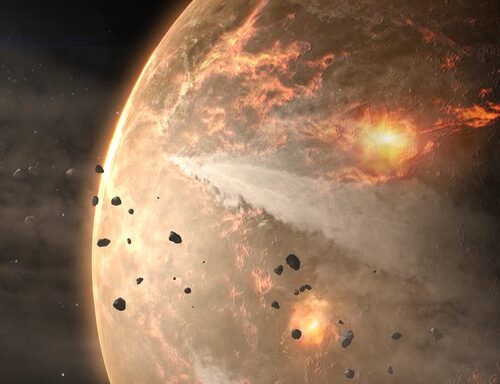
The missing 500 million: Cosmic bombardment melted Earth's first crust
The heat of the Hadean may have come from impacts as well as the interior.
Signal weather
Momentum is building quickly, so this card is a good early entry point into the topic.
Why now
Fresh coverage with immediate momentum.
Common 3D Benchy Problems, Causes and Fixes
Comments
Signal weather
Momentum is building quickly, so this card is a good early entry point into the topic.
Why now
Fresh coverage with immediate momentum.

Review: Supergirl is not the disaster its low box office suggests
It’s a pretty good movie, but it needed to be a great movie to thrive in an oversaturated superhero market.
Signal weather
Momentum is building quickly, so this card is a good early entry point into the topic.
Why now
Fresh coverage with immediate momentum.
More from Ars Technica
Fresh reporting and follow-up coverage from the same newsroom.
Chemical accidents rise as Trump administration proposes weakening safety rules
Chemicals from accidents that injured or killed people increased by nearly 50 percent in recent years.
Signal weather
Momentum is building quickly, so this card is a good early entry point into the topic.
Why now
Fresh coverage with immediate momentum.
The missing 500 million: Cosmic bombardment melted Earth's first crust
The heat of the Hadean may have come from impacts as well as the interior.
Signal weather
Momentum is building quickly, so this card is a good early entry point into the topic.
Why now
Fresh coverage with immediate momentum.
Review: Supergirl is not the disaster its low box office suggests
It’s a pretty good movie, but it needed to be a great movie to thrive in an oversaturated superhero market.
Signal weather
Momentum is building quickly, so this card is a good early entry point into the topic.
Why now
Fresh coverage with immediate momentum.

A martian rock has lots of carbon on it, and it's not clear why
Biology could explain the find, but there are other potential explanations.
Signal weather
Momentum is building quickly, so this card is a good early entry point into the topic.
Why now
Fresh coverage with immediate momentum.