You can finally change the goofy Gmail address you chose years ago
All your data remains intact, and you can go back to your original address at any time.
Signal weather
Stable
The story has moved beyond the first headline and now acts as a reliable context anchor.
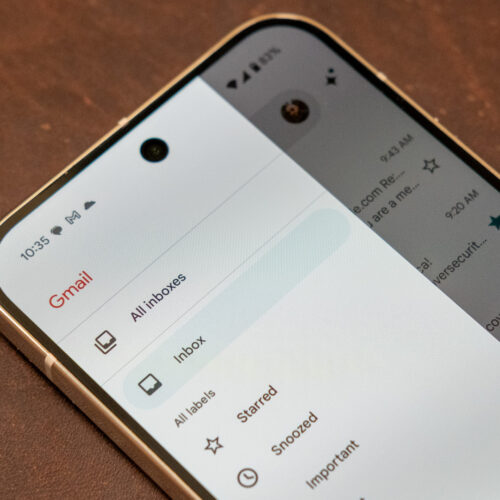
Someone is celebrating a birthday tomorrow—it's Gmail. The iconic email service debuted 22 years ago on April 1, forever altering what people expected from free email. But 22 years is a long time, and the username you chose when you finally got your hands on an invite in 2004 may not have stood the test of time. Starting today, Google will let US-based users ditch an old username without creating a new account. Google started testing this option some months ago, both in the US and internationally. Today, the name change feature is rolling out widely in the US. You can check for the option on this account page to get started (you'll have to log in). Some of the accounts we've checked already have the option, but it could take a while for it to appear for everyone. Over the years, many users have abandoned old Gmail addresses because the handle is too personal or their names have changed. Now, you don't have to abandon anything. When the option appears, you'll be able to change the username portion of your email (the part before @gmail) to anything you desire. However, Google says you can only change your address once every 12 months. The company hasn't explained why you're limited to one change per year, but it may be a measure to combat spam. Read full article Comments
Stay on the signal
Follow You can finally change the goofy Gmail address you chose years ago
Follow this story beyond a single article: new follow-ups, adjacent sources, and the evolving storyline.
Story map
Understand this topic fast
A quick entry into the story: why it matters now, who is involved, and where to go next for context.
Why it matters now
Topic constellation
Open the live map for this story
See which entities, story threads, sources, and follow-up articles shape this story right now.
Click nodes to continue
Entity pages
Story timeline
Continue with this story
A short sequence of events and follow-up stories to understand the arc quickly.
How reliable this looks
Signal and trust for Ars Technica
This source works at a rapid pace: 100% of recent stories land in the hot window, and 0% carry visible search signal.
Reliability
92
Freshness
100
Sources in storyline
2
Related articles
More stories that share tags, source, or category context.

Supreme Court ruling guts government’s use of geofence warrants
SCOTUS falls short of deeming geofence warrants unconstitutional, though.
Signal weather
Momentum is building quickly, so this card is a good early entry point into the topic.
Why now
Fresh coverage with immediate momentum.
Sony erases digital content from libraries; we're reminded we don’t own what we buy
Sony has been scaling down its digitial store for a few years.
Signal weather
Momentum is building quickly, so this card is a good early entry point into the topic.
Why now
Fresh coverage with immediate momentum.
Ozone loss was a thing even before CFCs were widely used
With today’s scientific tools, the problem could have been spotted in the 1950s.
Signal weather
Momentum is building quickly, so this card is a good early entry point into the topic.
Why now
Fresh coverage with immediate momentum.
.garden TLD's change to a bad neighborhood
Comments
Signal weather
Momentum is building quickly, so this card is a good early entry point into the topic.
Why now
Fresh coverage with immediate momentum.
More from Ars Technica
Fresh reporting and follow-up coverage from the same newsroom.

US offers $10 million for info on group behind Signal and WhatsApp hacking spree
Operation by two Russia-state groups has been ongoing since at least March.
Signal weather
Momentum is building quickly, so this card is a good early entry point into the topic.
Why now
Fresh coverage with immediate momentum.

US renewable boom passes key milestone in April
Small-scale solar helped renewables hit nearly triple coal's generation in the US.
Signal weather
Momentum is building quickly, so this card is a good early entry point into the topic.
Why now
Fresh coverage with immediate momentum.
Supreme Court ruling guts government’s use of geofence warrants
SCOTUS falls short of deeming geofence warrants unconstitutional, though.
Signal weather
Momentum is building quickly, so this card is a good early entry point into the topic.
Why now
Fresh coverage with immediate momentum.
Sony erases digital content from libraries; we're reminded we don’t own what we buy
Sony has been scaling down its digitial store for a few years.
Signal weather
Momentum is building quickly, so this card is a good early entry point into the topic.
Why now
Fresh coverage with immediate momentum.