You want your Moon landings in HD? So does NASA—here's how it's happening.
"You just push this button, and in three hours, you're counting photons."
Signal weather
Stable
The story has moved beyond the first headline and now acts as a reliable context anchor.
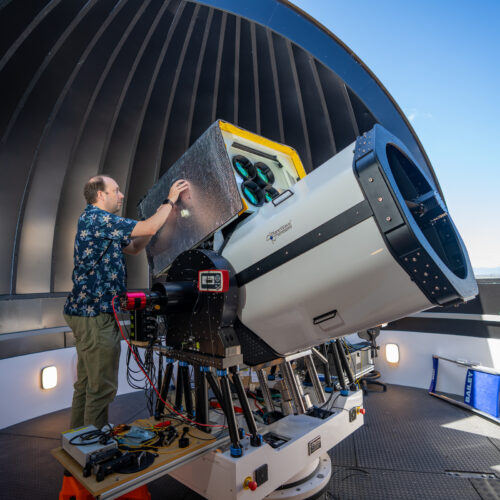
During most of the Artemis II mission, the crew of four astronauts beamed back low-definition video, both from inside the spacecraft and from exterior views of the Moon. It was exhilarating stuff, but in a world in which we're all watching HDTVs, it also felt a little flat. This is because Orion largely communicated with Earth via radio waves, picked up by large dishes sprinkled around the world. This is pretty much the same way the Apollo spacecraft talked to Earth more than half a century ago. However, unlike Apollo, the astronauts on Orion would periodically send batches of much higher-resolution data, including the stunning photographs of the far side of the Moon and the Solar eclipse observed from there. This was made possible by optical laser communications, and not just those built by NASA. The mission included a commercial component that could pave the way for vastly more data returning to Earth from space than ever before. Read full article Comments
Stay on the signal
Follow You want your Moon landings in HD? So does NASA—here's how it's happening.
Follow this story beyond a single article: new follow-ups, adjacent sources, and the evolving storyline.
Story map
Understand this topic fast
A quick entry into the story: why it matters now, who is involved, and where to go next for context.
Why it matters now
Topic constellation
Open the live map for this story
See which entities, story threads, sources, and follow-up articles shape this story right now.
Click nodes to continue
Entity pages
Story threads
Story timeline
Continue with this story
A short sequence of events and follow-up stories to understand the arc quickly.
How reliable this looks
Signal and trust for Ars Technica
This source works at a rapid pace: 100% of recent stories land in the hot window, and 0% carry visible search signal.
Reliability
92
Freshness
100
Sources in storyline
1
Related articles
More stories that share tags, source, or category context.
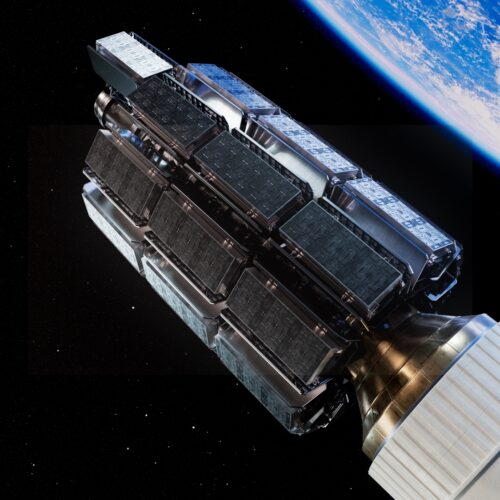
FCC lifts looming deadline for Amazon Leo satellite broadband constellation
The waiver "serves the public interest by promoting a second large satellite broadband constellation."
Signal weather
Momentum is building quickly, so this card is a good early entry point into the topic.
Why now
Fresh coverage with immediate momentum.
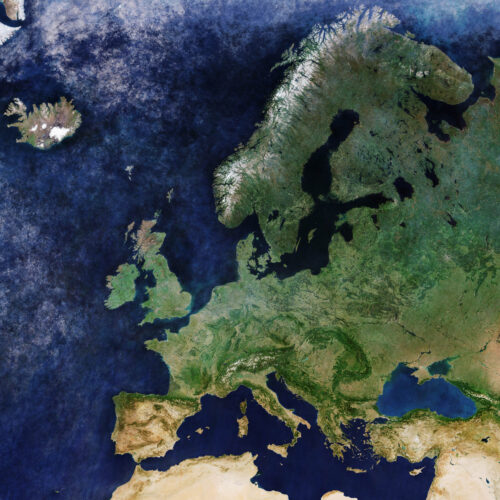
Tests suggest Russian satellites can jam GPS on a continental scale
Mystery of GPS interference across Europe raises questions about Russian motives.
Signal weather
Momentum is building quickly, so this card is a good early entry point into the topic.
Why now
Fresh coverage with immediate momentum.
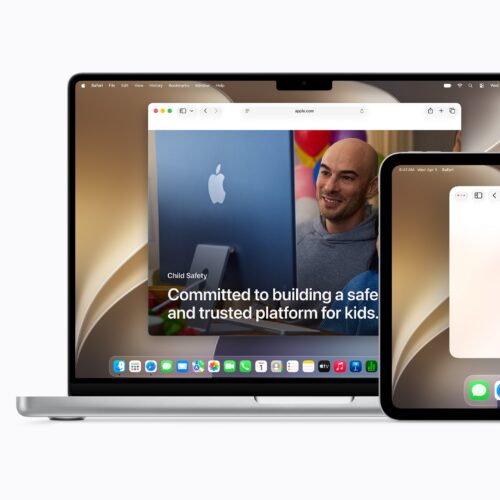
macOS 27 requires Apple Silicon, as Apple draws down the Intel Mac era
You'll need an M1 or better to run the next release of macOS.
Signal weather
Momentum is building quickly, so this card is a good early entry point into the topic.
Why now
Fresh coverage with immediate momentum.

iOS 27 and iPadOS 27 don't drop support for any iPhones—and just a few iPads
This promises to be a solid release for aging iPhones.
Signal weather
Momentum is building quickly, so this card is a good early entry point into the topic.
Why now
Fresh coverage with immediate momentum.
More from Ars Technica
Fresh reporting and follow-up coverage from the same newsroom.
FCC lifts looming deadline for Amazon Leo satellite broadband constellation
The waiver "serves the public interest by promoting a second large satellite broadband constellation."
Signal weather
Momentum is building quickly, so this card is a good early entry point into the topic.
Why now
Fresh coverage with immediate momentum.
Tests suggest Russian satellites can jam GPS on a continental scale
Mystery of GPS interference across Europe raises questions about Russian motives.
Signal weather
Momentum is building quickly, so this card is a good early entry point into the topic.
Why now
Fresh coverage with immediate momentum.
macOS 27 requires Apple Silicon, as Apple draws down the Intel Mac era
You'll need an M1 or better to run the next release of macOS.
Signal weather
Momentum is building quickly, so this card is a good early entry point into the topic.
Why now
Fresh coverage with immediate momentum.
iOS 27 and iPadOS 27 don't drop support for any iPhones—and just a few iPads
This promises to be a solid release for aging iPhones.
Signal weather
Momentum is building quickly, so this card is a good early entry point into the topic.
Why now
Fresh coverage with immediate momentum.