"Cognitive surrender" leads AI users to abandon logical thinking, research finds
Experiments show large majorities uncritically accepting "faulty" AI answers.
Signal weather
Stable
The story has moved beyond the first headline and now acts as a reliable context anchor.

When it comes to large language model-powered tools, there are generally two broad categories of users. On one side are those who treat AI as a powerful but sometimes faulty service that needs careful human oversight and review to detect reasoning or factual flaws in responses. On the other side are those who routinely outsource their critical thinking to what they see as an all-knowing machine. Recent research goes a long way to forming a new psychological framework for that second group, which regularly engages in "cognitive surrender" to AI's seemingly authoritative answers. That research also provides some experimental examination of when and why people are willing to outsource their critical thinking to AI, and how factors like time pressure and external incentives can affect that decision. Just ask the answer machine In "Thinking—Fast, Slow, and Artificial: How AI is Reshaping Human Reasoning and the Rise of Cognitive Surrender," researchers from the University of Pennsylvania sought to build on existing scholarship that outlines two broad categories of decision-making: one shaped by "fast, intuitive, and affective processing" (System 1); and one shaped by "slow, deliberative, and analytical reasoning" (System 2). The onset of AI systems, the researchers argue, has created a new, third category of "artificial cognition" in which decisions are driven by "external, automated, data-driven reasoning originating from algorithmic systems rather than the human mind."Read full article Comments
Stay on the signal
Follow "Cognitive surrender" leads AI users to abandon logical thinking, research finds
Follow this story beyond a single article: new follow-ups, adjacent sources, and the evolving storyline.
Story map
Understand this topic fast
A quick entry into the story: why it matters now, who is involved, and where to go next for context.
Why it matters now
Topic constellation
Open the live map for this story
See which entities, story threads, sources, and follow-up articles shape this story right now.
Click nodes to continue
Entity pages
Story timeline
Continue with this story
A short sequence of events and follow-up stories to understand the arc quickly.
How reliable this looks
Signal and trust for Ars Technica
This source works at a rapid pace: 100% of recent stories land in the hot window, and 0% carry visible search signal.
Reliability
92
Freshness
100
Sources in storyline
2
Related articles
More stories that share tags, source, or category context.
Why Apple’s slow-and-steady AI bet is starting to look pretty smart
Can Apple's new AI glow up put to bed accusations that it's losing an all-important industry race?
Signal weather
Momentum is building quickly, so this card is a good early entry point into the topic.
Why now
Fresh coverage with immediate momentum.
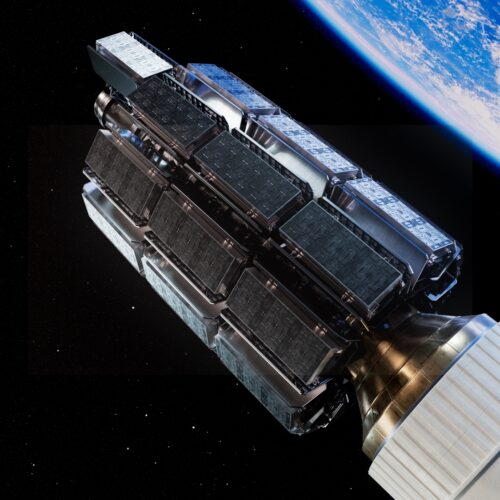
FCC lifts looming deadline for Amazon Leo satellite broadband constellation
The waiver "serves the public interest by promoting a second large satellite broadband constellation."
Signal weather
Momentum is building quickly, so this card is a good early entry point into the topic.
Why now
Fresh coverage with immediate momentum.
Apple’s WWDC AI demos looked more real after $250M false ad settlement
The vibe of Apple's 2026 WWDC keynote felt like a spouse proudly listing all the honey-do-list items tackled. One subtle example: the many AI demos of someone standing, phone in...
Signal weather
Momentum is building quickly, so this card is a good early entry point into the topic.
Why now
Fresh coverage with immediate momentum.

Tests suggest Russian satellites can jam GPS on a continental scale
Mystery of GPS interference across Europe raises questions about Russian motives.
Signal weather
Momentum is building quickly, so this card is a good early entry point into the topic.
Why now
Fresh coverage with immediate momentum.
More from Ars Technica
Fresh reporting and follow-up coverage from the same newsroom.
FCC lifts looming deadline for Amazon Leo satellite broadband constellation
The waiver "serves the public interest by promoting a second large satellite broadband constellation."
Signal weather
Momentum is building quickly, so this card is a good early entry point into the topic.
Why now
Fresh coverage with immediate momentum.
Tests suggest Russian satellites can jam GPS on a continental scale
Mystery of GPS interference across Europe raises questions about Russian motives.
Signal weather
Momentum is building quickly, so this card is a good early entry point into the topic.
Why now
Fresh coverage with immediate momentum.

macOS 27 requires Apple Silicon, as Apple draws down the Intel Mac era
You'll need an M1 or better to run the next release of macOS.
Signal weather
Momentum is building quickly, so this card is a good early entry point into the topic.
Why now
Fresh coverage with immediate momentum.

iOS 27 and iPadOS 27 don't drop support for any iPhones—and just a few iPads
This promises to be a solid release for aging iPhones.
Signal weather
Momentum is building quickly, so this card is a good early entry point into the topic.
Why now
Fresh coverage with immediate momentum.