Did Iron Age Britons remove brains of the dead?
Archaeologists found apparent scrape marks inside a skull; long bones may have been sharpened into tools.
Signal weather
Rising
Momentum is building quickly, so this card is a good early entry point into the topic.
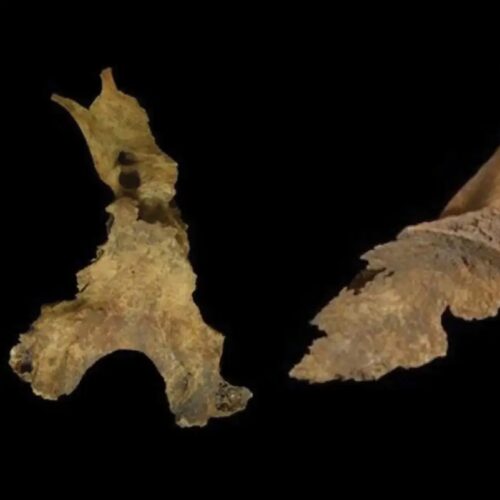
Very little is known about funerary practices in Iron Age Britain, since few human remains have survived. However, the environment in northwest Scotland is more conducive to preserving bone from that period. Archaeologists have previously noted evidence of postmortem manipulation of human remains, such as mummification, and of modifying human bones into tools or decorative artifacts. Now a new paper published in the journal Antiquity describes evidence of postmortem brain removal in remains from that region, as well as sharpened limb bones, possibly for use as tools. The remains in question were found in 2000 at a burial cairn in Loch Borralie, near the most northwest tip of the Scottish mainland, after erosion revealed a human cranium. The excavated remains belonged to two individuals: one an adult female and the other a juvenile of (at the time) indeterminate sex; the cranium belonged to the latter. The authors of the new paper conducted a fresh osteoarchaeological analysis as well as multi-isotope and ancient DNA analysis. Radiocarbon dating of molar teeth from both sets of remains placed their deaths as occurring between 50 BCE and 70 CE. In the case of the female individual, the authors noted an unusual break at the base of the cranium that likely occurred near the time of death. It's the kind of fracture that one gets from high-velocity impacts, including vehicular collisions, sporting accidents, falls, assaults, or even long-drop hanging. But the known forensic patterns observed in the aforementioned scenarios don't exactly match the pattern of the Iron Age cranium, leading the authors to conclude that it likely resulted from a targeted impact. They also noted perimortem fractures on both scapulae. Read full article Comments
Stay on the signal
Follow Did Iron Age Britons remove brains of the dead?
Follow this story beyond a single article: new follow-ups, adjacent sources, and the evolving storyline.
Story map
Understand this topic fast
A quick entry into the story: why it matters now, who is involved, and where to go next for context.
Why it matters now
Topic constellation
Open the live map for this story
See which entities, story threads, sources, and follow-up articles shape this story right now.
Click nodes to continue
Story timeline
Continue with this story
A short sequence of events and follow-up stories to understand the arc quickly.
How reliable this looks
Signal and trust for Ars Technica
This source works at a rapid pace: 100% of recent stories land in the hot window, and 0% carry visible search signal.
Reliability
92
Freshness
100
Sources in storyline
1
Related articles
More stories that share tags, source, or category context.
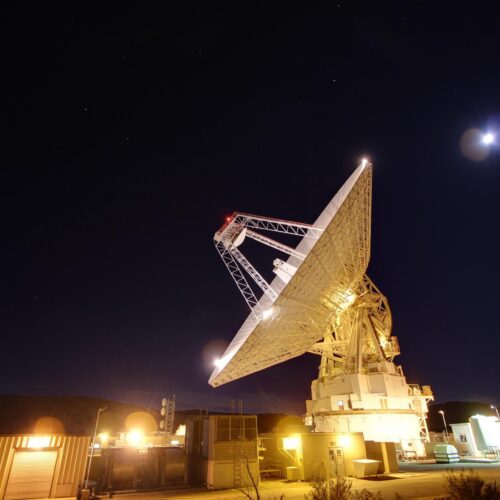
After nearly breaking, NASA's Deep Space Network "worked well" on Artemis II
"Some missions are using more than what their paperwork would say."
Signal weather
Momentum is building quickly, so this card is a good early entry point into the topic.
Why now
Fresh coverage with immediate momentum.
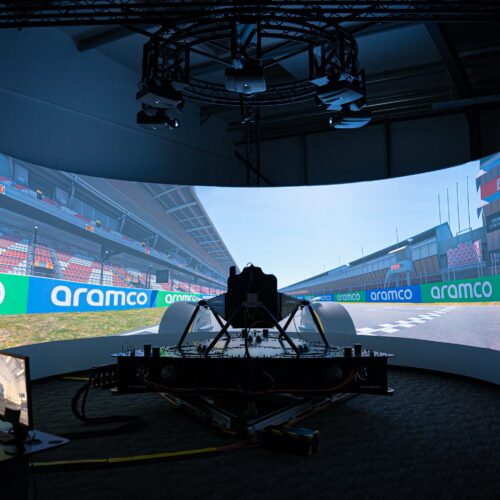
F1 teams spend millions on their simulators—what makes them different?
Latency, bandwidth, and fidelity all matter when you're chasing milliseconds.
Signal weather
Momentum is building quickly, so this card is a good early entry point into the topic.
Why now
Fresh coverage with immediate momentum.

"This cannot continue": Xbox leaders lay out "hard truths" behind sagging brand
Brutal self-assessment paints a picture of a Microsoft gaming division in crisis.
Signal weather
Momentum is building quickly, so this card is a good early entry point into the topic.
Why now
Fresh coverage with immediate momentum.
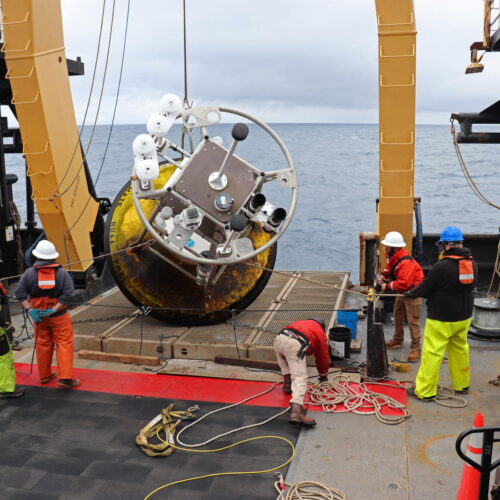
Alaskans will be flying blind after NSF decommissions ocean monitoring network
Alaska's multibillion-dollar fishing industry and vulnerable coastal communities at risk.
Signal weather
Momentum is building quickly, so this card is a good early entry point into the topic.
Why now
Fresh coverage with immediate momentum.
More from Ars Technica
Fresh reporting and follow-up coverage from the same newsroom.
After nearly breaking, NASA's Deep Space Network "worked well" on Artemis II
"Some missions are using more than what their paperwork would say."
Signal weather
Momentum is building quickly, so this card is a good early entry point into the topic.
Why now
Fresh coverage with immediate momentum.
F1 teams spend millions on their simulators—what makes them different?
Latency, bandwidth, and fidelity all matter when you're chasing milliseconds.
Signal weather
Momentum is building quickly, so this card is a good early entry point into the topic.
Why now
Fresh coverage with immediate momentum.
"This cannot continue": Xbox leaders lay out "hard truths" behind sagging brand
Brutal self-assessment paints a picture of a Microsoft gaming division in crisis.
Signal weather
Momentum is building quickly, so this card is a good early entry point into the topic.
Why now
Fresh coverage with immediate momentum.
Alaskans will be flying blind after NSF decommissions ocean monitoring network
Alaska's multibillion-dollar fishing industry and vulnerable coastal communities at risk.
Signal weather
Momentum is building quickly, so this card is a good early entry point into the topic.
Why now
Fresh coverage with immediate momentum.