Ugandan chimps split into two factions, then killed rivals
Rare event suggests relational dynamics may play a role in collective violence, along with cultural markers.
Signal weather
Stable
The story has moved beyond the first headline and now acts as a reliable context anchor.
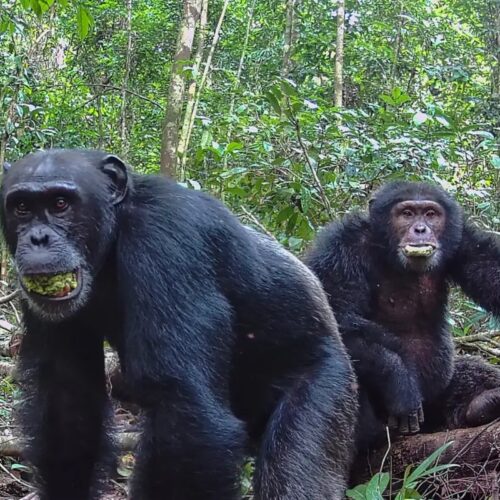
In the 1970s, the late Jane Goodall observed a community of chimpanzees in Gombe, Tanzania, breaking into two factions; the males in one group ended up killing all the males in the rival group over the next four years, along with one female chimp. But the case was considered an anomaly, although there is genetic evidence suggesting this kind of split is a rare event occurring every 500 years or so. Now researchers have observed the largest known community of Ngogo chimpanzees in Uganda also permanently splitting into two rival groups with a similar outbreak of violence, according to a new paper published in the journal Science. "What's especially striking is that the chimpanzees are killing former group members," said co-author Aaron Sandel, an anthropologist at the University of Texas, Austin. "The new group identities are overriding cooperative relationships that had existed for years. I would caution against anyone calling this a civil war. But the polarization and collective violence that we have observed with these chimpanzees may give us insight into our own species." The authors analyzed 24 years' worth of data from social networks, 10 years of GPS tracking, and 30 years of demographic data on the Ngogo chimps in Uganda's Kibale National Park. They identified three distinct phases to the split. First there was an abrupt shift as chimp relationships became polarized into two distinct clusters: Western and Central. The chimps then spent the next two years increasingly avoiding those in their rival cluster; there were very few interactions across clusters, and Western male chimps started patrolling their territory, showing increased aggression toward Central males. By 2018, the fissure had become permanent. Read full article Comments
Stay on the signal
Follow Ugandan chimps split into two factions, then killed rivals
Follow this story beyond a single article: new follow-ups, adjacent sources, and the evolving storyline.
Story map
Understand this topic fast
A quick entry into the story: why it matters now, who is involved, and where to go next for context.
Why it matters now
Topic constellation
Open the live map for this story
See which entities, story threads, sources, and follow-up articles shape this story right now.
Click nodes to continue
Entity pages
Story timeline
Continue with this story
A short sequence of events and follow-up stories to understand the arc quickly.
How reliable this looks
Signal and trust for Ars Technica
This source works at a rapid pace: 100% of recent stories land in the hot window, and 0% carry visible search signal.
Reliability
92
Freshness
100
Sources in storyline
1
Related articles
More stories that share tags, source, or category context.

Mystery GPS jammer in Iran becomes test for NASA satellites’ capabilities
NASA science satellites show dual use in locating sources of GPS interference.
Signal weather
Momentum is building quickly, so this card is a good early entry point into the topic.
Why now
Fresh coverage with immediate momentum.
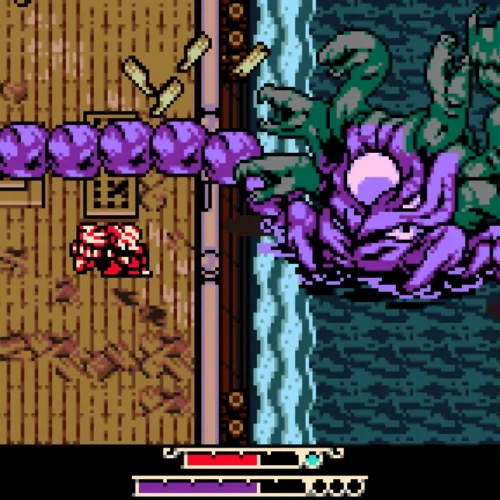
Mina the Hollower is the best old-school action adventure I've played in a while
Smooth movement, compelling combat, and tons of secrets make for an innovative throwback.
Signal weather
Momentum is building quickly, so this card is a good early entry point into the topic.
Why now
Fresh coverage with immediate momentum.

Nvidia bets $150B on Taiwan as Trump's plan to make US an AI hub backfires
Nvidia will invest $150 billion a year to make Taiwan an AI “epicenter.”
Signal weather
Momentum is building quickly, so this card is a good early entry point into the topic.
Why now
Fresh coverage with immediate momentum.

Roku OS’s home screen now features a large, permanent ad
“I don't want recommendations! I know what I want to watch."
Signal weather
Momentum is building quickly, so this card is a good early entry point into the topic.
Why now
Fresh coverage with immediate momentum.
More from Ars Technica
Fresh reporting and follow-up coverage from the same newsroom.

California defeats Tesla's attempt to throw out racial discrimination lawsuit
California civil rights agency hails win over Tesla, anticipates trial in July.
Signal weather
Momentum is building quickly, so this card is a good early entry point into the topic.
Why now
Fresh coverage with immediate momentum.

Websites have a new way to spy on visitors: analyzing their SSD activity
Telltale SSD activity can be measured in the browser using simple JavaScript.
Signal weather
Momentum is building quickly, so this card is a good early entry point into the topic.
Why now
Fresh coverage with immediate momentum.
Mystery GPS jammer in Iran becomes test for NASA satellites’ capabilities
NASA science satellites show dual use in locating sources of GPS interference.
Signal weather
Momentum is building quickly, so this card is a good early entry point into the topic.
Why now
Fresh coverage with immediate momentum.
Mina the Hollower is the best old-school action adventure I've played in a while
Smooth movement, compelling combat, and tons of secrets make for an innovative throwback.
Signal weather
Momentum is building quickly, so this card is a good early entry point into the topic.
Why now
Fresh coverage with immediate momentum.